
🏠 Melton Mowbray Slate Roof Specialists
Slate Roofs in Melton Mowbray — Built to Outlast Everything the Wolds Can Throw at It
- Free Drone Survey
- Directly Employed Roofers
- Written Fixed Price
📞 Call 01664 490955 — free drone survey & a written price
Book Your Free Drone Survey
No scaffold. No pressure. No obligation.
Straight answers from local Melton Mowbray roofers.
🔒 Your details are safe with us. No spam, ever.
Melton Mowbray sits low against the Vale of Belvoir, but the villages up on the Wolds take the weather full force. A slate roof handles that weather better than almost anything else you can put over a house, standing up to driving rain, hard frost, and gusts sweeping off the scarp with nothing to slow them down. If you own a period property near St Mary's Church, a limestone cottage out toward Waltham on the Wolds, or a family home anywhere across the borough, slate roofs in Melton Mowbray reward the investment with a covering that can outlast the people who fitted it.
This page covers how to tell a slate roof needs repair rather than replacement, which type of slate suits your property, what conservation rules apply near the town centre, what installation day looks like, and real cost ranges for the area. Start with a free drone survey and a written quote before agreeing to anything — no scaffold just to take a look, and no charge either way. Slate work is one part of the wider service we offer as a roofing contractor across Melton Mowbray.
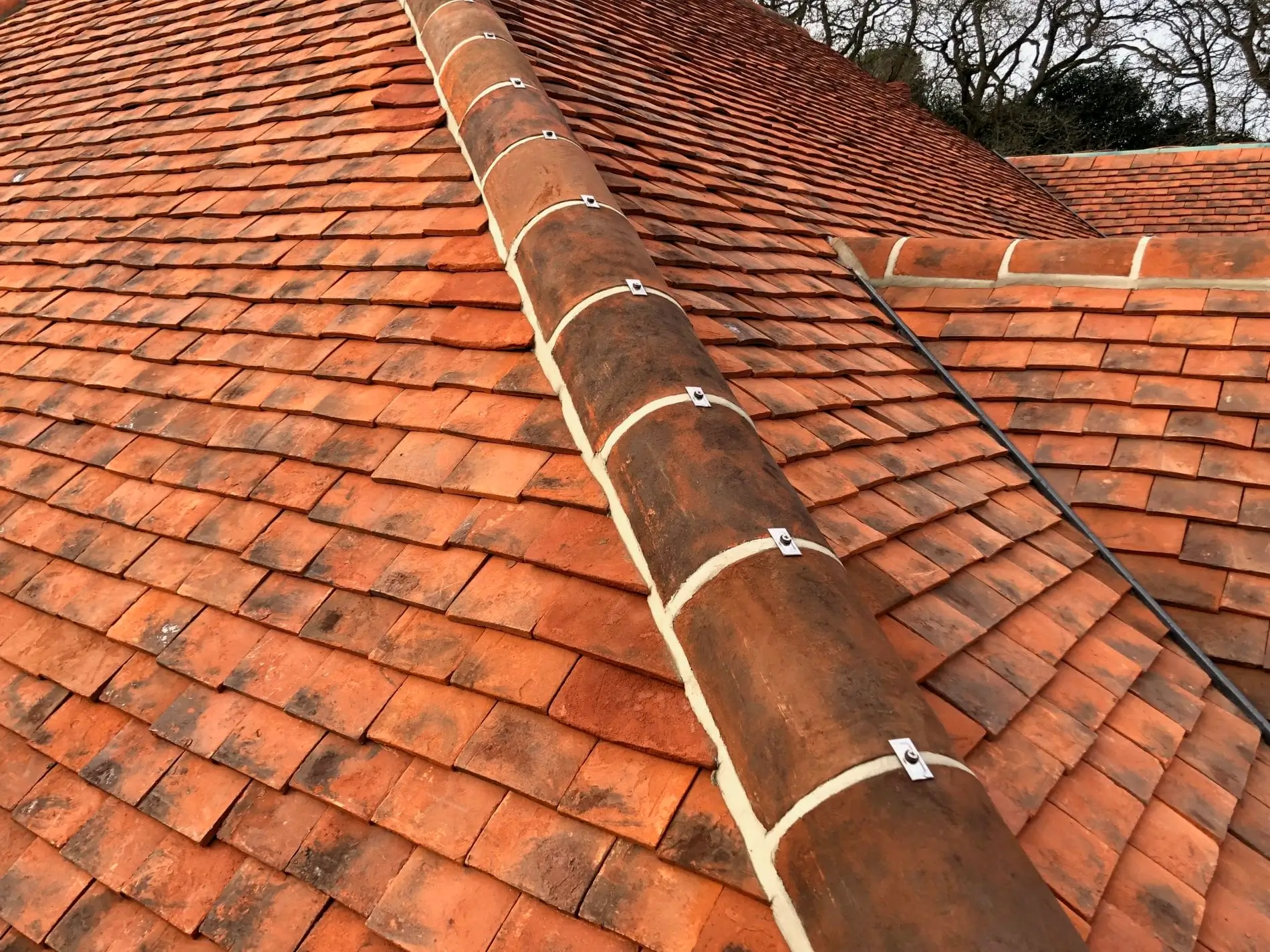
Spot the Warning Signs Before a Small Slate Problem Gets Expensive
Slate rarely fails all at once. It usually gives clear warning first, but the signs are easy to miss unless you know where to look.
Watch out for these:
- Slates that have slipped out of line or vanished after high wind
- Small triangles of daylight showing through the roof from inside the loft
- Ceiling stains that spread a little more after every downpour
- Slates that look sound but have started sliding in neat rows, not scattered
- Heavy moss buildup in the valleys and gutters
- A musty smell in the loft that only appears after rain
- A roof over 80 years old that has never had a proper inspection
A natural slate roof can run past 100 years, but it is often the fixings underneath, not the slate itself, that give out first. Properties around Melton Mowbray with original nails from the early 1900s are now well within the window where this starts to show. A free drone survey settles the question with footage, not guesswork, so you know exactly what is happening up there before it costs you more.
Repair, Re-Slate, or Full Replacement — Getting the Call Right
A handful of slipped or cracked slates is not a reason to replace an entire roof. Localised damage on an otherwise sound slate roof is almost always a straightforward repair, and it should stay that way.
We see the opposite problem often on older properties around Old Dalby and Frisby on the Wreake, where a roof gets patched every year or two without anyone checking whether the fixings underneath are actually failing. Patching buys a season, but the underlying cause keeps costing money until it is dealt with properly. If a handful of slates need attention rather than the whole roof, our slate roof repair service handles it without the cost or disruption of a full re-slate.
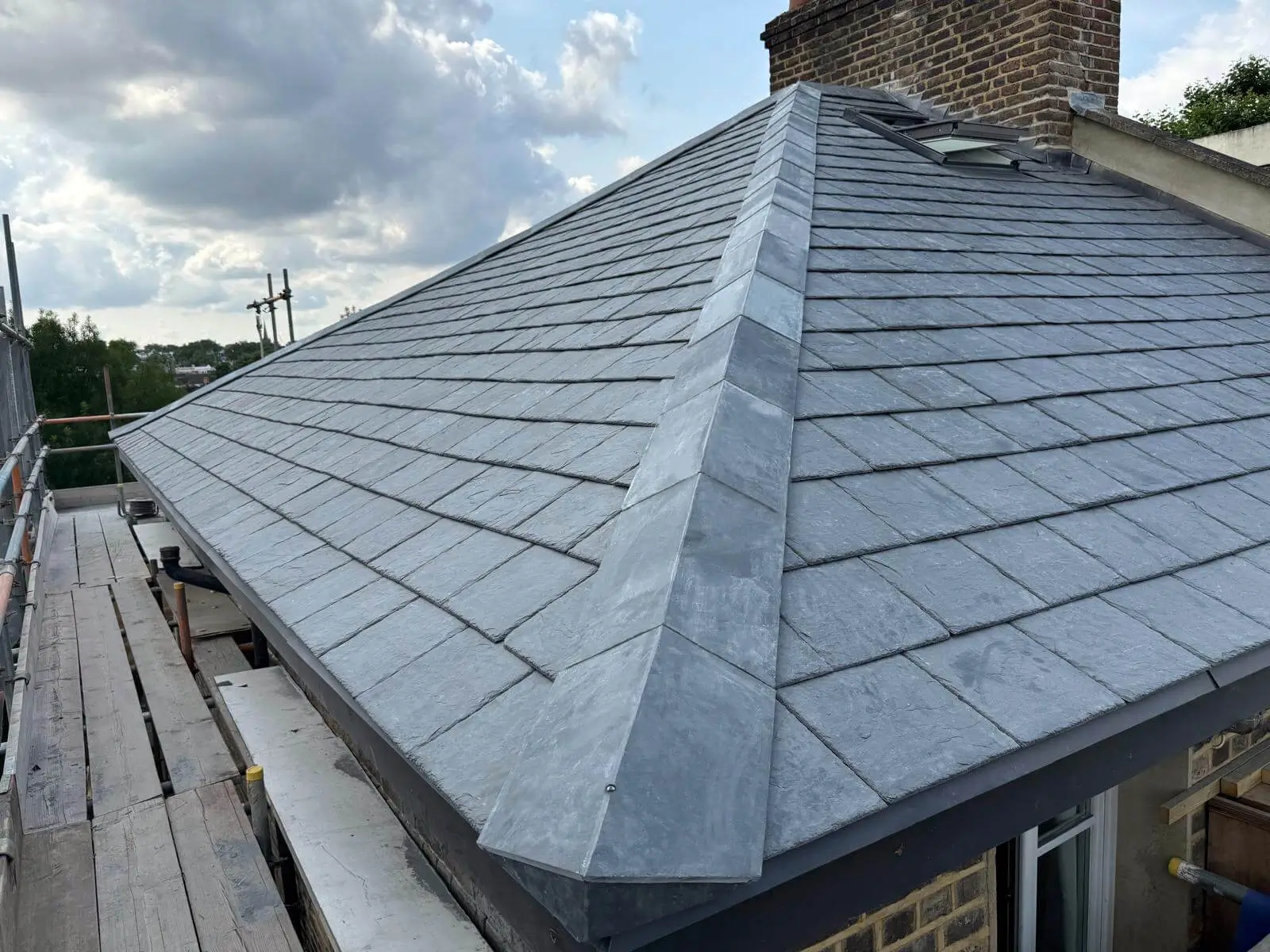
Widespread slipping, a pattern of failed fixings across most of the roof, or slate that has simply reached the end of its working life points toward a full re-slate instead. As a rough rule, once around a fifth of the slates on a roof need replacing, a full re-slate usually works out cheaper than another round of patching. We check the whole roof before recommending either route, with drone footage rather than a guess from the pavement.
Welsh, Spanish, Westmorland or Fibre-Cement — Choosing the Right Slate for Your Home
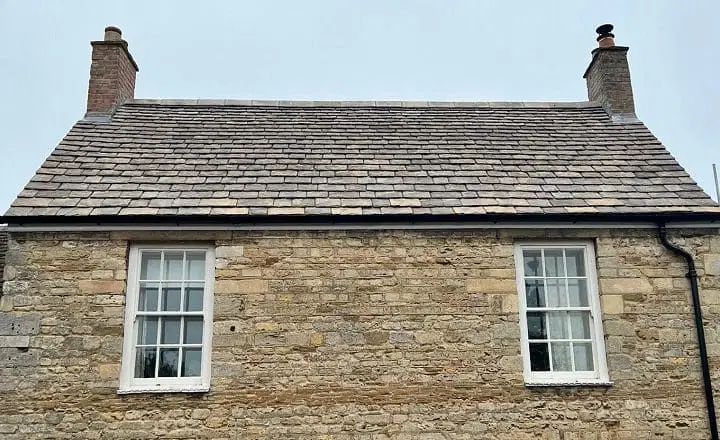
Not all slate is the same, and the choice matters more on a period property than almost any other roofing decision you will make. Welsh slate is the densest and longest-lasting, often specified on listed buildings because of its proven track record and tight, uniform look. Spanish slate offers a strong, slightly more affordable alternative with a similar appearance. Westmorland green slate, quarried in the Lake District, brings a distinctive grey-green tone that suits certain character properties but comes at a premium. Fibre-cement and synthetic slate copy the look for far less money, at the cost of a much shorter working life.
Detached and equestrian properties around Somerby and the affluent conservation streets of Waltham on the Wolds tend to suit natural slate best, since it matches the traditional limestone and ironstone character of those villages. Where budget is the driver and a property sits outside a conservation boundary, fibre-cement slate gives a similar appearance at a fraction of the cost, though it will not last anywhere near as long.
| Material | Typical cost (per m²) | Typical lifespan | Best for |
|---|---|---|---|
| Natural slate (Welsh) | £140–£180 | 100–150+ years | Listed buildings, premium heritage properties |
| Natural slate (Spanish) | £100–£130 | 75–100 years | Period homes wanting a genuine slate finish |
| Fibre-cement slate | £60–£90 | 30–40 years | Budget-conscious like-for-like look, modern extensions |
| Synthetic composite slate | £55–£90 | 40–50 years | Lightweight roofs, structures unsuited to natural slate's weight |
James Tate, our founder, prices most of the slate jobs personally, and it is the material he enjoys working with most. Fifteen years working roofs across Melton Mowbray before starting the business left him with a genuine liking for a tricky period roof, working out how to put it right without losing the character that makes it worth saving in the first place.
Conservation Areas and Listed Buildings — What Melton's Older Streets Require
Melton Mowbray's streets around St Mary's Church carry a dense mix of Georgian and Victorian roofs, many within a conservation area where roofing changes get closer scrutiny than almost anywhere else in the borough. Councils in these areas generally expect natural slate to be replaced with natural slate, matched in colour, size and thickness, rather than swapped for a cheaper look-alike. Listed buildings go further still, with conservation officers often specifying the exact quarry origin and fixing method used on the original roof.
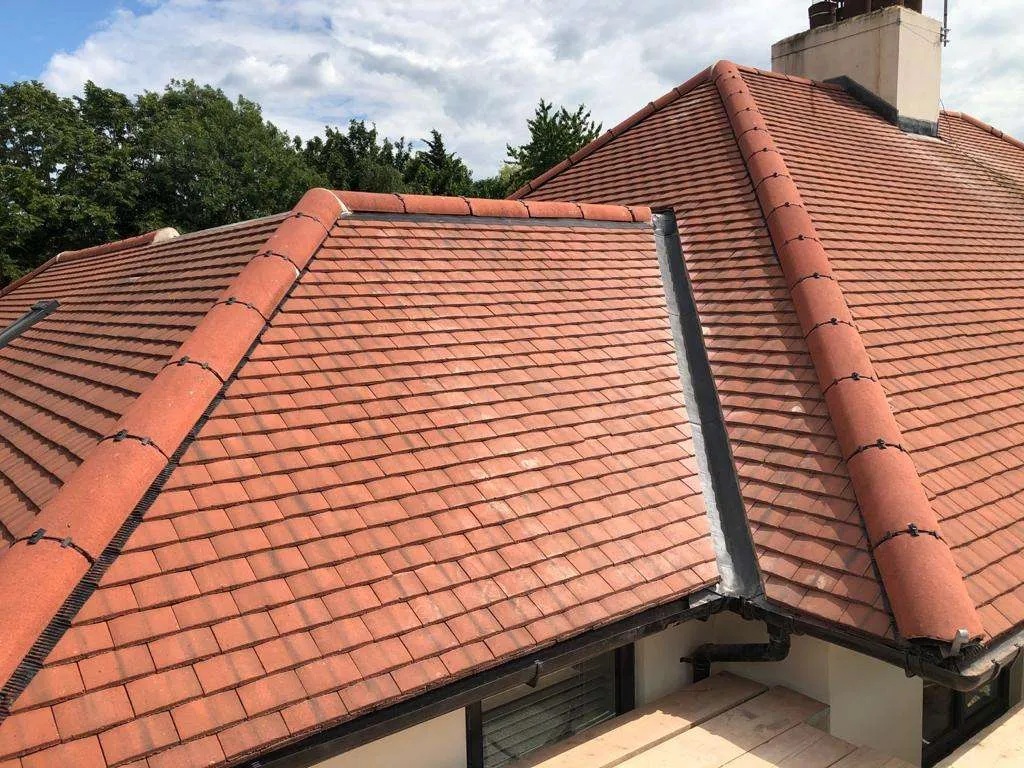
Grander period properties, the kind found around Stapleford Park Estate and similar country house settings, sit at the top end of this scale, where heritage-grade slate and traditional lead detailing are usually non-negotiable. The historic hillside village of Burton Lazars carries a similar mix of older roofs worth protecting properly rather than patched with the wrong material. The Society for the Protection of Ancient Buildings sets out clear advice on true slate roofing that lines up closely with how we approach every heritage job we take on. If your property needs specialist heritage sign-off, our heritage and listed building roofing service is built specifically for that kind of work.
We check a property's conservation and listed status before quoting, not after. That way you know what is realistic, and what will need planning consent, before scaffold ever goes up.
What Happens on Slate Roofing Day, Start to Finish
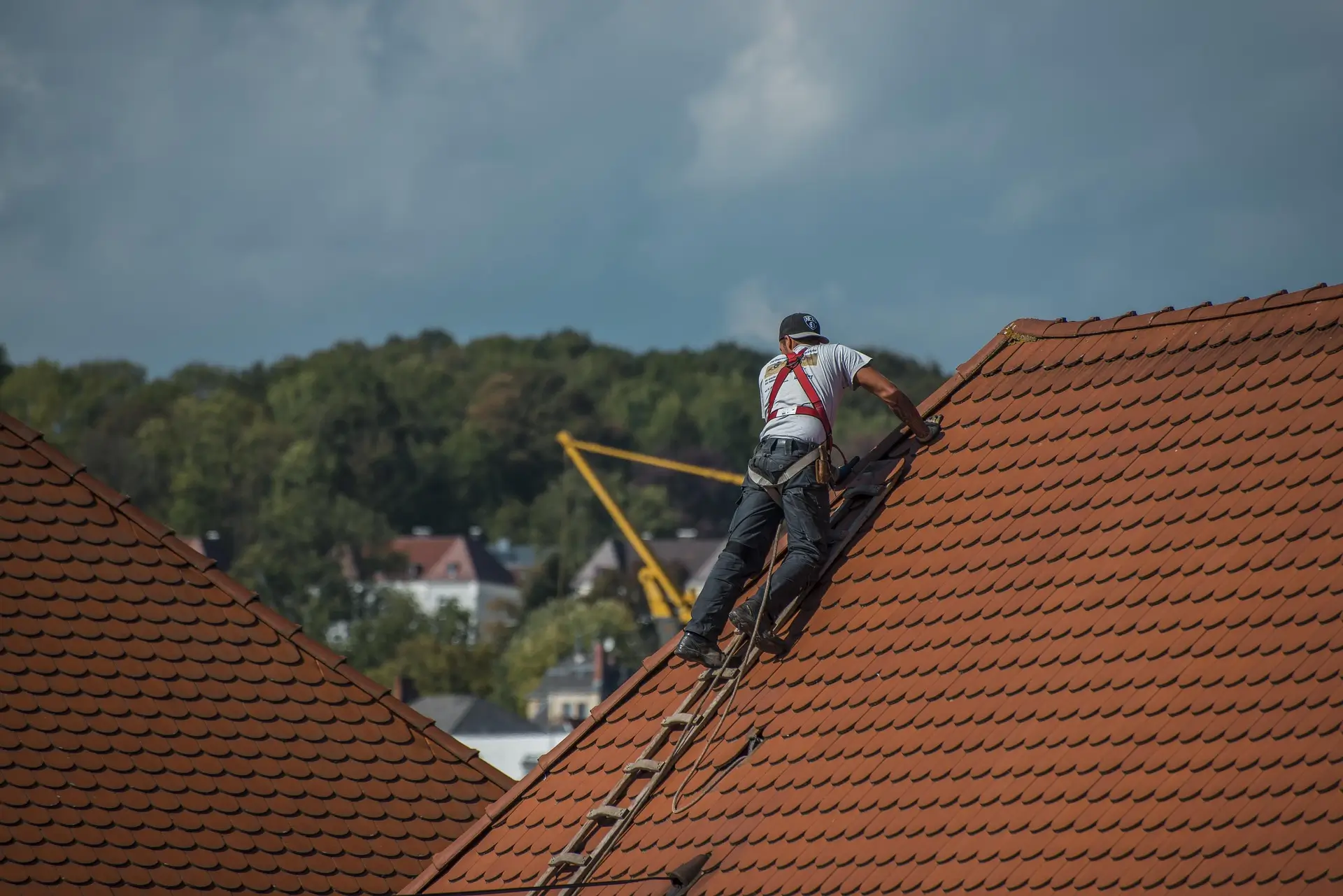
A full re-slate follows the same order on every job we take on across Melton Mowbray:
- Scaffold erected and the site made safe
- Old slate carefully stripped, with sound slates set aside for reuse where possible
- Battens, felt and roof timbers checked, with any rot replaced
- Insulation and ventilation brought up to current standards
- New slate fitted course by course, from the eaves up to the ridge
- Lead flashings and valleys dressed by hand around chimneys and abutments
- Site cleared and the finished roof checked before we leave
A typical semi-detached slate re-roof takes around 5 to 9 working days, longer than concrete or clay tile because each slate is hung and fixed individually. A hipped or period
roof, common on the older streets near the town centre and out toward Thorpe Arnold, can take 10 to 15 days once lead detailing and reclaimed matching are factored in. Weather has the final say, and we build a realistic allowance into the schedule rather than promising a date we cannot keep.
You do not usually need to leave the property while a re-slate is carried out. Expect noise above for the duration, and we protect driveways, borders and anything stored below the working area throughout.
What a Slate Roof Really Costs in Melton Mowbray
Natural slate typically costs 100 to 180 pounds per square metre fitted, with Spanish slate at the lower end and Welsh slate at the top. Fibre-cement and synthetic slate alternatives run 55 to 90 pounds per square metre, considerably cheaper upfront but with a much shorter lifespan. As a general guide, a straightforward gable-end slate re-roof on a semi-detached home typically totals 9,000 to 19,000 pounds depending on whether Spanish or Welsh slate is specified. A hipped or larger period roof, common across Melton's older streets and villages such as Waltham on the Wolds, often runs 20,000 to 30,000 pounds or more. Choosing a fibre-cement alternative on the same roof shape usually costs 5,500 to 9,000 pounds instead,
though it will not be accepted on listed buildings or in most conservation areas.
What pushes a price up or down:
- Slate origin — Welsh slate costs more than Spanish, and both cost more than fibre-cement or synthetic alternatives
- Roof shape and size — hips, valleys and dormers all add labour and cut slate
- Access — scaffolding a detached roof on exposed high ground costs less than one boxed in by neighbouring buildings
- Batten and timber condition — rotten battens or rafters typically add 600 to 2,000 pounds before the new slate goes on
- Lead detailing — traditional hand-dressed lead around chimneys and valleys costs more than standard flashing but lasts far longer
- Reclaimed or matched slate — sourcing slate to match a listed building's original roof can add a large amount to material cost
Labour makes up roughly half to 60 percent of the total on most slate jobs, since slate needs slower, more careful handling than concrete or clay tile. These are general market ranges, not a quote for your roof. A fixed price needs a survey.
Keep a Slate Roof Performing for the Next Century
A well-fitted slate roof is built to outlast most owners, but a little regular attention keeps it doing exactly that.
- Clear moss and debris from valleys and gutters each autumn
- Check the loft after storms for daylight or damp patches
- Watch for slates slipping in a row, a sign of fixings failing underneath
- Keep lead flashings around chimneys and abutments clear and unblocked
- Book a free drone survey every few years, or straight after any major storm
None of this needs a specialist visit, just a regular look and a call to us if anything seems off. Properties near the old Stockyard and Cattle Market, and other exposed spots close to Melton Country Park, tend to collect leaf
and moss debris faster than sheltered streets and are worth checking a little more often. Catching a small problem early is always cheaper than letting it run.
Why Melton Mowbray Homeowners Trust Tate & Sons With Their Slate
Slate rewards a roofer who actually understands it, and punishes one who does not. James Tate, our founder, spent fifteen years working roofs across Melton Mowbray before starting the business, and heritage and period-property slate work remains where he is happiest, up a ladder working out how to put an old roof right without losing what makes it special. He still prices most slate jobs personally rather than handing quotes off to someone who has never seen the property.
Daniel Oakland, our project manager, brings more than twenty years of hands-on fitting experience, including heritage slate and traditional lead detailing on older homes across the Melton area. Between the two of them, and a wider team carrying over 40 years of combined experience, NVQ Level 2 and 3 qualifications in Roofing Occupations, and CSCS cards, your slate roof is handled by people who have actually fitted hundreds like it. Janice Whitmore, our office manager, keeps you posted from the first phone call through to the final inspection. Read more about the people behind the work on our About Tate & Sons Roofing page.
Areas We Serve Across Melton Mowbray and the Vale of Belvoir
We fit and repair slate roofs across Melton Mowbray and the surrounding villages and borough. If your area is not on the list below, call us anyway, there is a strong chance we already cover you.
- Melton Mowbray (LE13)
- Asfordby (LE14 3)
- Old Dalby (LE14 3)
- Nether Broughton (LE14 3)
- Frisby on the Wreake (LE14 2)
- Wymondham (LE14 2)
- Long Clawson (LE14 4)
- Harby (LE14 4)
- Stathern (LE14 4)
- Waltham on the Wolds (LE14 4)
- Bottesford (NG13)
Got Questions?
Your Slate Roof Questions, Answered Properly
How long does a slate roof actually last?
A well-fitted natural slate roof can last 80 to 100 years, and often considerably longer. Welsh slate is the most durable, sometimes running past 150 years on a well-maintained roof. Spanish slate typically manages 75 to 100 years. The slate itself often outlives the nails holding it down, which is why most full re-slates happen once the fixings fail rather than the slate itself.
What does a slate roof cost per square metre in the UK?
Natural slate typically costs 100 to 180 pounds per square metre fitted, depending on whether it is Spanish or Welsh. Fibre-cement slate alternatives run 60 to 90 pounds per square metre, and synthetic composite slate sits in a similar range. Labour makes up roughly half to 60 percent of the total, since slate needs careful, slower handling than most other coverings. A free drone survey gives you an exact price for your roof rather than a rough average.
What's the difference between Welsh and Spanish slate?
Welsh slate is denser and typically lasts longer, often 100 to 150 years compared to 75 to 100 years for Spanish slate. Welsh slate also costs more, generally 140 to 180 pounds per square metre fitted against 100 to 130 pounds for Spanish. Conservation officers around Melton Mowbray often specify Welsh slate on listed buildings because of its proven history and appearance. Spanish slate remains a strong, more affordable choice for most other properties.
Can individual slipped or cracked slates be repaired without a full re-roof?
Yes, in most cases a handful of slipped or cracked slates just need replacing individually. We match the new slate to the existing roof and refix it using traditional methods, so the repair is barely visible. A full re-slate only becomes the sensible option once repairs are needed across a large share of the roof, usually once around a fifth of the slates have failed. Our slate roof repair service covers this exact type of targeted work.
What is nail sickness, and how do I know if it is affecting my roof?
Nail sickness is what happens when the original fixing nails corrode and let sound slates slip out of place. It usually shows up as slates sliding down the roof or gaps appearing in neat rows, even though the slate itself looks fine. It is one of the most common reasons a roof needs re-slating well before the slate has actually worn out. A drone survey usually spots the early signs, slipped slates in a pattern rather than scattered damage, before it becomes obvious from the ground.
Can I switch to fibre-cement slate if my home is in a conservation area near St Mary's Church?
Usually not without permission, and it is often refused outright. Conservation officers around St Mary's Church and Melton's older streets generally expect natural slate to be replaced with natural slate, matched in colour, size and thickness. Fibre-cement and synthetic alternatives are more likely to be accepted on modern extensions or properties outside a conservation boundary. We check a property's planning status before quoting, so you know what is realistic before any work is agreed.
Does the wind exposure on the Wolds mean my slate roof needs stronger fixings?
Yes, properties out toward Waltham on the Wolds and Scalford take a harder battering from wind-driven rain than sheltered streets in town. Fixing methods, nail specification and verge detailing often need to go beyond the standard minimum on these exposed sites. We factor a property's height, position and exposure into every specification, not a one-size-fits-all approach. Getting this right at installation is far cheaper than chasing slipped slates every winter afterwards.
Does moss on a slate roof actually cause damage?
Yes, moss holds moisture against the slate and encourages exactly the kind of freeze-thaw damage that shortens a roof's life. It also blocks gutters and valleys, which can send water backing up under the slates instead of running off cleanly. Light moss on an otherwise sound roof is usually just a cleaning job, not a repair. Left for years, though, it can speed up wear on both the slate and the fixings beneath it.
Does re-slating affect my home insurance?
It can, usually for the better. A recently re-slated roof with paperwork, a workmanship guarantee and proof of proper installation often reassures insurers, since it removes the risk of an ageing roof failing suddenly. Always tell your insurer once major slate work is complete. Keep the guarantee and any completion paperwork somewhere safe in case you need to show them later.
Book Your Free Drone Slate Roof Survey Today
See exactly what your slate roof needs before any work starts. No ladders, no pressure, just a clear picture from a local Melton Mowbray team.
Every winter a slipped slate is left alone, water finds its way past the felt and into timber that was never meant to get wet. A quick, free drone survey shows you exactly which slates need attention now, and often the fix is far smaller than you feared. Book today, get an honest written price, and keep your slate roof doing what it does best for decades to come.
Get in Touch
Tate & Sons Roofing, Melton Mowbray
13 Cromwell Road, Melton Mowbray, LE13 0AD
📞 01664 490955
✉️ [email protected]