
🏠 Melton Mowbray Onduline Roofing Specialists
Onduline Roofing in Melton Mowbray — Lightweight Cover Built for Sheds, Stables and Outbuildings
- Free Drone Survey
- Directly Employed Roofers
- Written Fixed Price
📞 Call 01664 490955 — free drone survey & a written price
Book Your Free Drone Survey
No scaffold. No pressure. No obligation.
Straight answers from local Melton Mowbray roofers.
🔒 Your details are safe with us. No spam, ever.
A shed roof or stable block does not need the same covering as a house, but it still needs to keep water out for years, not months. Onduline roofing in Melton Mowbray gives you a lightweight bitumen corrugated sheet that goes on fast, costs less than steel or fibre cement, and holds up well on the timber structures most outbuildings already have. Tate & Sons Roofing fits Onduline and other bitumen corrugated systems across Melton Mowbray and the surrounding farms and villages.
This page covers when Onduline is the right sheet for your building, how it compares to steel and fibre cement corrugated roofing, what fitting one properly involves, and real cost figures. If your project is a wider corrugated roof in steel or fibre cement rather than bitumen sheet specifically, our corrugated roofing service covers that broader range of materials. For anything else roofing across the borough, we work as a roofing contractor across Melton Mowbray, from full re-roofs to single outbuildings.
Know When Onduline Bitumen Sheets Are Right for Your Building
Onduline Classic is a corrugated sheet made from cellulose fibres soaked in bitumen under heat and pressure. It weighs around 3.4kg per square metre, roughly a tenth the weight of a tiled roof covering. That makes it a natural fit for buildings that were never built to carry heavy loads.
It suits these buildings well:
- Garden sheds and small workshops
- Stables and field shelters
- Hay barns and open-sided farm buildings
- Garages and low-value outbuildings
- Allotment stores and log stores
Around Long Clawson and the farmland further out, we see Onduline used most often on stables and agricultural outbuildings, where a lightweight, budget-friendly sheet does the job without the cost of a slate or tile roof designed for a house.
It is not the right choice for a habitable extension, a home office, or anywhere you want a long design life measured in decades rather than years. For those buildings, steel, fibre cement, or a proper flat roofing system will serve you better long-term.
Onduline vs Steel vs Fibre Cement — Choosing the Right Corrugated Sheet
All three materials do the same basic job, but they suit different buildings, budgets and timeframes. In short: Onduline is the cheapest and lightest option, steel corrugated sits in the middle on cost with a longer working life, and fibre cement costs the most but lasts the longest and suits buildings you want to leave alone for decades.
| Material | Typical cost (per m², fitted) | Typical lifespan | Best for |
|---|---|---|---|
| Onduline / bitumen corrugated | £25–£45 | 15–30 years | Sheds, stables, budget outbuildings, quick replacements |
| Steel corrugated | £20–£40 | 25–40 years | Larger farm buildings, workshops, long spans |
| Fibre cement corrugated | £30–£55 | 30–50+ years | Barns and outbuildings you want to leave alone for decades |
Steel corrugated sheet generally outlasts Onduline and resists impact better, but it can rust at cut edges and fixing points over time, and it carries heat and cold through to the space below more than a bitumen sheet does. Fibre cement lasts longest of the three and suits a permanent agricultural building, but it costs more up front and needs careful handling on site. If a wider steel roof is what you actually need, our metal roofing service covers that separately from bitumen sheet work. Down by the Stockyard and the old Cattle Market site, where several buildings still carry working agricultural roofs among newer commercial units, you can see all three materials sitting side by side — a fair reminder that the right choice depends on the building, not fashion.
What Onduline Roofing Really Costs in Melton Mowbray
Onduline sheets themselves are inexpensive. A standard 2m x 0.95m sheet costs roughly £20–£30 to buy, which works out at around £15–£20 per square metre for materials alone once overlaps are allowed for. Fitted cost, including labour, fixings, purlins and ridge detailing, typically runs £25–£45 per square metre for a straightforward outbuilding.
As a general guide for typical outbuildings:
- A garden shed or small store (10–15m²): roughly £600–£1,000
- A single stable or garage-sized building (25–35m²): roughly £1,200–£2,200
- A larger barn or multi-stable block (60–100m²+): roughly £3,000–£6,000 or more
What pushes the price up or down:
- Purlin condition — rotten or wrongly spaced purlins need work before sheets go on
- Old roof removal — stripping an old felt or asbestos-cement roof adds cost, and asbestos removal must be handled separately by a licensed contractor where needed
- Roof shape and size — a simple duo-pitch prices lower than a roof with hips, valleys or multiple penetrations
- Access — a farm building down a rough track costs more to reach than one on a made-up drive
- Rooflights and vents — every penetration through the sheet adds a detail that needs sealing properly
These are general market ranges, not a quote for your building. A fixed price needs a survey, and our free drone survey gets you an accurate written figure without a single ladder going up against your building.
Getting Your Roof Ready — Pitch, Purlins and Deck Before Sheets Go On
Onduline sheets need a minimum roof pitch of 5 degrees when laid over a full timber deck, or 10 degrees when fixed directly onto open purlins without decking. Below that, water does not shed fast enough and sits in the corrugations, working its way under the laps over time.
Purlin spacing matters just as much as pitch. Space purlins too far apart and the sheet sags between them under its own weight, wind uplift, or heavy snow.
Because Onduline is so light, it does not demand the heavier structural specification a habitable timber-frame building normally needs — the kind of spec detailed in the Structural Timber Association's member guidance on structural timber frame construction, which is worth understanding if you are comparing a bitumen sheet outbuilding to a fully timber-framed structure built to housing standards.
Out toward Scalford and the higher ground, exposed outbuildings take a harder run of wind with nothing to slow it before it hits the roof. On sites like these, we check purlin spacing and fixing pattern more closely than we would on a sheltered building in town, because a roof that performs fine in a quiet garden can struggle on an exposed hillside without the right detailing underneath.
How We Fit an Onduline Roof, Start to Finish
A typical Onduline installation follows a consistent order:
- Old covering stripped back, with any asbestos-cement sheets handled separately under licensed procedures where present
- Purlins checked, repaired or replaced where needed
- Timber deck laid where the pitch requires one
- Sheets laid from the eaves upward, with a full end lap and correct side overlap
- Around 20 fixings per sheet, with every corrugation fixed at eaves, laps and ridges
- Ridge pieces, verge trims and flashings fitted to shed water cleanly
- Site cleared and the finished roof checked before we leave
A single shed or small stable is often finished in a day. A larger barn or multi-bay stable block usually takes two to four days, depending on size and how much purlin work is needed underneath. Onduline sheets are not designed to be walked on directly — where access across the roof is needed during fitting, we use crawl boards laid flat across the purlins, never the sheets alone.
Keep an Onduline Roof Watertight for Years to Come
Onduline roofing is low-maintenance, but a little attention keeps it performing for its full working life. A quick check twice a year catches small issues before they become leaks.
- Clear moss and debris from valleys and gutter lines each autumn
- Check fixings after any severe storm, especially on exposed sites
- Look for lifted laps or cracked corrugations near the ridge
- Watch for daylight or damp inside the building after heavy rain
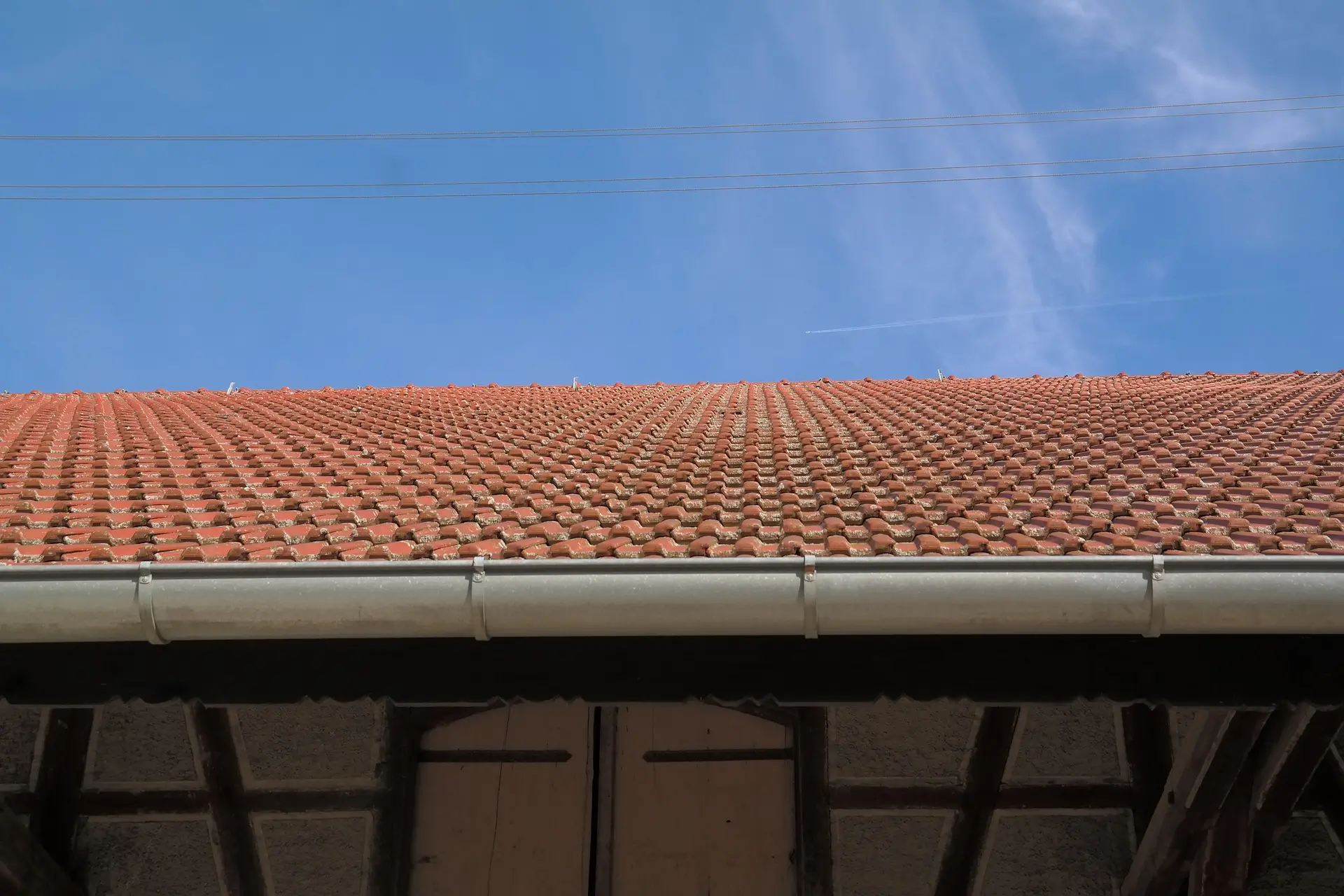
Around Harby and the flatter farmland nearby, older stable and barn roofs often carry decades of small repairs stacked on top of each other. Once patch after patch stops holding, a full re-cover with fresh Onduline sheets is usually cheaper over time than another round of temporary fixes. A free drone survey shows the whole roof from above, so you know whether you are looking at another repair or a proper re-cover.
Why Melton Mowbray Farms and Homeowners Choose Tate & Sons for Onduline Roofing
Daniel Oakland, our project manager and lead roofer, has over twenty years in the trade and takes the lead on outbuilding and agricultural roofing work across Melton Mowbray, alongside his work on EPDM, GRP, standing-seam and heritage slate roofing. He knows the difference between a sheet that will last on an exposed barn and one that will not, and he specifies purlin spacing and fixing patterns accordingly rather than following a generic checklist.
Founder James Tate spent fifteen years working roofs across Melton Mowbray and the surrounding area before starting the business, and he still prices most jobs himself. His founding principle was simple: find out what is genuinely wrong, use the right materials, and stand behind the result, whether that job is a stable roof or a full house re-roof. Between us we bring over 40 years of combined team experience, hold NVQ Level 2 and 3 qualifications in Roofing Occupations, and carry CSCS cards. Janice Whitmore, our office manager, keeps you updated from your first call through to the finished job. Read more about the people behind the work on our About Tate & Sons Roofing page.
Areas We Serve Across Melton Mowbray and the Vale of Belvoir
We fit Onduline and other bitumen corrugated roofing across Melton Mowbray and the surrounding villages and farmland. If your building is not listed below, call us anyway — there is a strong chance we already cover you.
- Melton Mowbray (LE13)
- Asfordby (LE14 3)
- Old Dalby (LE14 3)
- Nether Broughton (LE14 3)
- Frisby on the Wreake (LE14 2)
- Wymondham (LE14 2)
- Long Clawson (LE14 4)
- Harby (LE14 4)
- Stathern (LE14 4)
- Waltham on the Wolds (LE14 4)
- Bottesford (NG13)
Got Questions?
Your Onduline Roofing Questions, Answered Properly
How long does Onduline roofing actually last?
Onduline Classic sheets carry a 15-year waterproofing guarantee, and with reasonable upkeep they typically run 20 to 30 years before they need replacing. That is shorter than steel corrugated, which usually manages 25 to 40 years, and considerably shorter than fibre cement, which can pass 50 years. The trade-off is cost and weight — Onduline is cheaper to buy and far easier to handle on site, which is why it suits budget-conscious outbuildings rather than buildings you want to leave untouched for a lifetime.
Can Onduline sheets go straight over an old asbestos-cement stable roof near Harby, or does the old roof need removing first?
No, an old asbestos-cement roof generally needs checking and removing by a licensed contractor before new Onduline sheets go on, rather than simply sheeting over the top. Older stable and barn roofs around Harby and similar farmland often used asbestos-cement corrugated sheet, and disturbing, cutting or drilling into damaged sheets without the right process creates a real health risk. We arrange licensed removal as a separate stage where needed, then fit the new Onduline roof onto sound, checked purlins. This costs more than a straightforward re-cover, but it is the only safe and legal route.
What is the minimum pitch for an Onduline roof?
The minimum pitch is 5 degrees when the sheets sit over a full timber deck, or 10 degrees when fixed directly onto open purlins without decking. Below that pitch, water does not clear the corrugations fast enough and can work its way under the laps over time. Most sheds, stables and single-pitch outbuildings around Melton Mowbray comfortably exceed this, but it is worth checking on very shallow lean-to structures before ordering materials. We check pitch as standard during every survey.
Can you walk on an Onduline roof once it's fitted?
Not directly, no. Onduline sheets are not designed to take foot traffic on their own, and standing on them between purlins risks cracking the corrugation. Where access is genuinely needed for maintenance, crawl boards or ladders laid flat and supported across the purlins spread the weight safely. If you need regular roof access for any reason, tell us at survey stage so we can plan proper access points into the fixing pattern.
How much does Onduline roofing cost for a shed or stable in Melton Mowbray?
A small shed or store typically costs £600 to £1,000 fully fitted, a single stable or garage-sized building runs roughly £1,200 to £2,200, and a larger barn or multi-stable block can reach £3,000 to £6,000 or more. Purlin condition, access, roof shape, and whether an old asbestos roof needs licensed removal all affect the final figure. These are general guides rather than quotes for your specific building. A fixed price needs a survey, which is exactly what our free drone survey provides.
Does Onduline roofing contain asbestos?
No, Onduline sheets contain no asbestos at all. They are made from cellulose fibres impregnated with bitumen and were specifically designed as a safe, modern alternative to older fibre-cement sheets that often did contain asbestos before the 1980s and 1990s. This makes Onduline a common choice when replacing an old asbestos-cement roof, once the original sheets have been safely removed by a licensed contractor.
Does Onduline roofing sag or ripple in strong summer sun over open purlins?
It can, if purlins are spaced too widely for the sheet or the fixing pattern is light. Bitumen sheet softens very slightly in strong heat, and over an unsupported span that can show up as gentle rippling or sagging between purlins. Correct purlin spacing and the full fixing pattern of around 20 fasteners per sheet, with every corrugation fixed at eaves, laps and ridges, largely prevents this. It is one of the details competitors sometimes skip on lower-cost jobs, and one we do not.
What happens to old Onduline sheets once they come off a roof?
Old Onduline sheets are non-hazardous but also non-recyclable, so they cannot go back into general recycling streams. We take them to a licensed waste facility for proper disposal rather than burning them on site, since incinerating bitumen-based material can release harmful pollutants. It is a small detail, but responsible disposal is part of doing the job properly rather than leaving a mess behind on a farm site.
Is Onduline tough enough for an exposed barn roof near Long Clawson with no windbreak?
Yes, when it is fitted correctly. Onduline Classic is tested to withstand very high wind speeds, but that performance depends entirely on correct purlin spacing and the full recommended fixing pattern, not just the sheet itself. Farm buildings around Long Clawson often sit in open fields with a clear run for the wind and no hedgerow or building to break it, which is exactly where a light fixing pattern fails first. We specify a tighter fixing schedule on exposed sites like these rather than using the same approach we would on a sheltered garden shed.
Book Your Free Drone Survey for Your Onduline Roof Today
See exactly what your shed, stable or barn roof needs before any work starts. No ladders against your building, no pressure — just a clear picture from a local Melton Mowbray team.
Every season a tired Onduline or old asbestos-cement roof is left alone, water works further into the purlins and timber beneath it, and a straightforward re-cover can turn into a bigger structural repair. A free drone survey today tells you exactly where you stand, with an honest written price to follow. Book now and get your outbuilding roof sorted properly, first time.
Get in Touch
Tate & Sons Roofing, Melton Mowbray
13 Cromwell Road, Melton Mowbray, LE13 0AD
📞 01664 490955
✉️ [email protected]