
🏠 Melton Mowbray Chimney Lead Flashing Specialists
Lead Flashing Around Chimneys in Melton Mowbray — Stop Leaks Where Your Roof Meets the Stack
- Free Drone Survey
- Directly Employed Roofers
- Written Fixed Price
📞 Call 01664 490955 — free drone survey & a written price
Book Your Free Drone Survey
No scaffold. No pressure. No obligation.
Straight answers from local Melton Mowbray roofers.
🔒 Your details are safe with us. No spam, ever.
More roofs across Melton Mowbray leak at the chimney than anywhere else. The joint where brick meets tile is small, but it takes the full force of rain running down the stack in every storm off the Wolds. When the lead flashing around chimneys on your home fails, water finds that gap within weeks, not years.
Tate & Sons Roofing fits and repairs the soakers, stepped flashing and cover flashing that keep this junction watertight, as part of our wider chimney services across Melton Mowbray. This page covers the warning signs, the three lead details doing the actual work, real cost ranges, and what a proper repair looks like from the first inspection to the final check. Start with a free drone survey, so you get a written price before any work is agreed.
If your leak sits somewhere else on the roof, our general lead work and lead flashing service covers valleys, dormers and flat roof abutments too. This page focuses on the one junction that fails more often than any other on a Melton Mowbray roof — the chimney.
Spot the Warning Signs Before a Small Leak Becomes a Big Repair
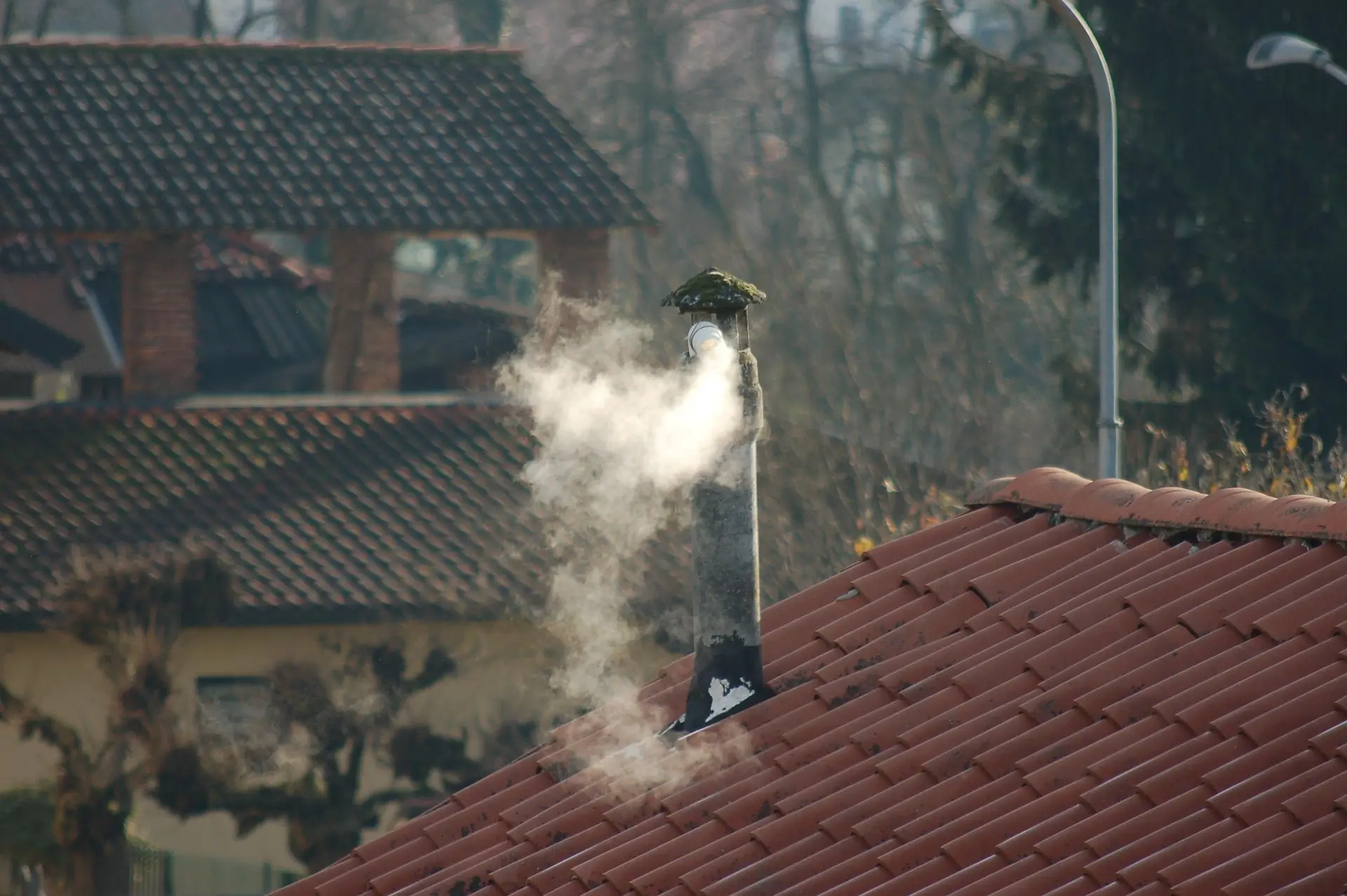
Chimney flashing rarely fails all at once. It lifts a little, corrodes a little, and lets a small amount of water through long before anything looks obviously wrong from the ground. By the time a stain shows on your ceiling, water has usually been getting into your Melton Mowbray home for months.
Look out for these signs:
- Damp patches or brown staining on the chimney breast wall or the ceiling below
- A musty smell in the loft that gets worse after rain
- Green or white patches on the lead itself, rather than plain grey weathering
- Lifted or curling lead edges where the flashing meets the brick
- Cracked, sunken or missing mortar in the joint holding the flashing in place
- Moss or plant growth taking root in a gap you cannot see from the street
Loose or crumbling mortar around the flashing chase is one of the most common causes we find on older properties. If the joint itself has failed rather than the lead, our chimney repointing service deals with that side of the job before any new flashing goes in.
We see this pattern often on the older brick chimneys around Thorpe Arnold and Burton Lazars, where decades of repointing have left the flashing chase shallower than it should be, letting water track in through the gap.
Soakers, Stepped Flashing or Cover Flashing — Which One Does Your Chimney Need?
A chimney does not rely on one piece of lead. It uses three, each doing a different job, and a repair only holds if all three are right. Get one wrong and water finds the gap the others were built to close. Most flashing failures we find on Melton Mowbray chimneys involve just one of these details, not the whole assembly.
Soakers are small, individual pieces of lead tucked under each course of tile along the sloping sides of the chimney. Each one acts like its own tiny gutter, catching water before it reaches the tile below.
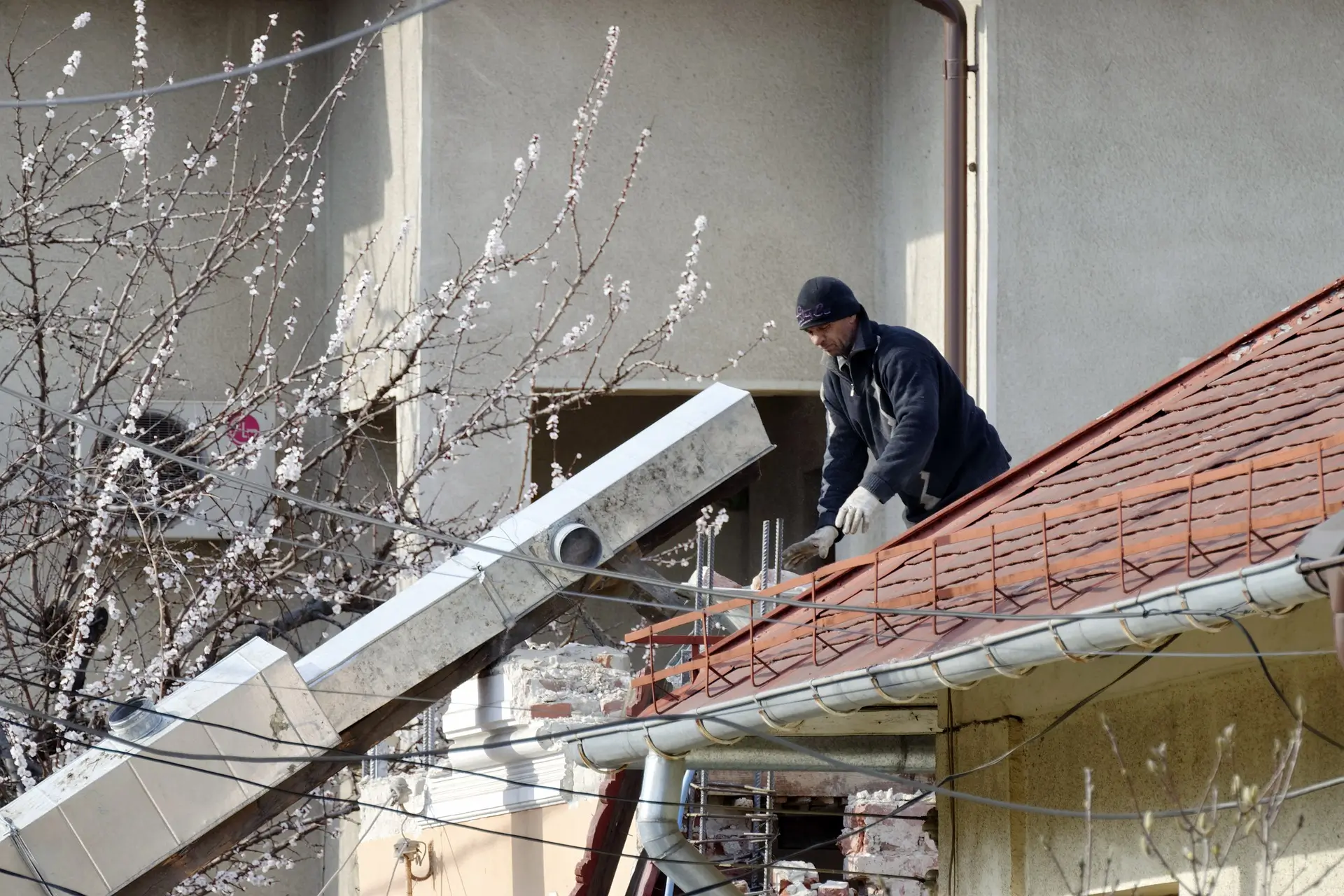
Stepped flashing runs up each side of the chimney above the soakers, cut into the mortar joint in a staircase pattern. It covers the top edge of every soaker and stops water tracking sideways into the brick. Cover flashing, also called an apron, dresses over the tiles at the front of the chimney and forms the back gutter behind it. The back gutter carries the most water of any part of the assembly, and it fails more often than the sides.
| Lead detail | Typical cost | Typical use | Typical lifespan |
|---|---|---|---|
| Soakers | £80–£180 (fitted alongside other flashing work) | Individual seal under each tile course on the sloping sides | 50–80 years (Code 3–4 lead) |
| Stepped flashing | £200–£700 per side | Covers soaker tops, tucked into the stepped mortar joint | 60–100 years (Code 4 lead) |
| Cover flashing (apron & back gutter) | £150–£950 per chimney | Front apron and back gutter where the chimney meets the roof slope | 50–80 years (Code 4–5 lead) |
Most repairs need more than one of these details replaced together, since they overlap and rely on each other to shed water. A free drone survey tells you which ones your chimney actually needs, rather than guessing from the ground.
What Lead Flashing Around Chimneys Really Costs in Melton Mowbray
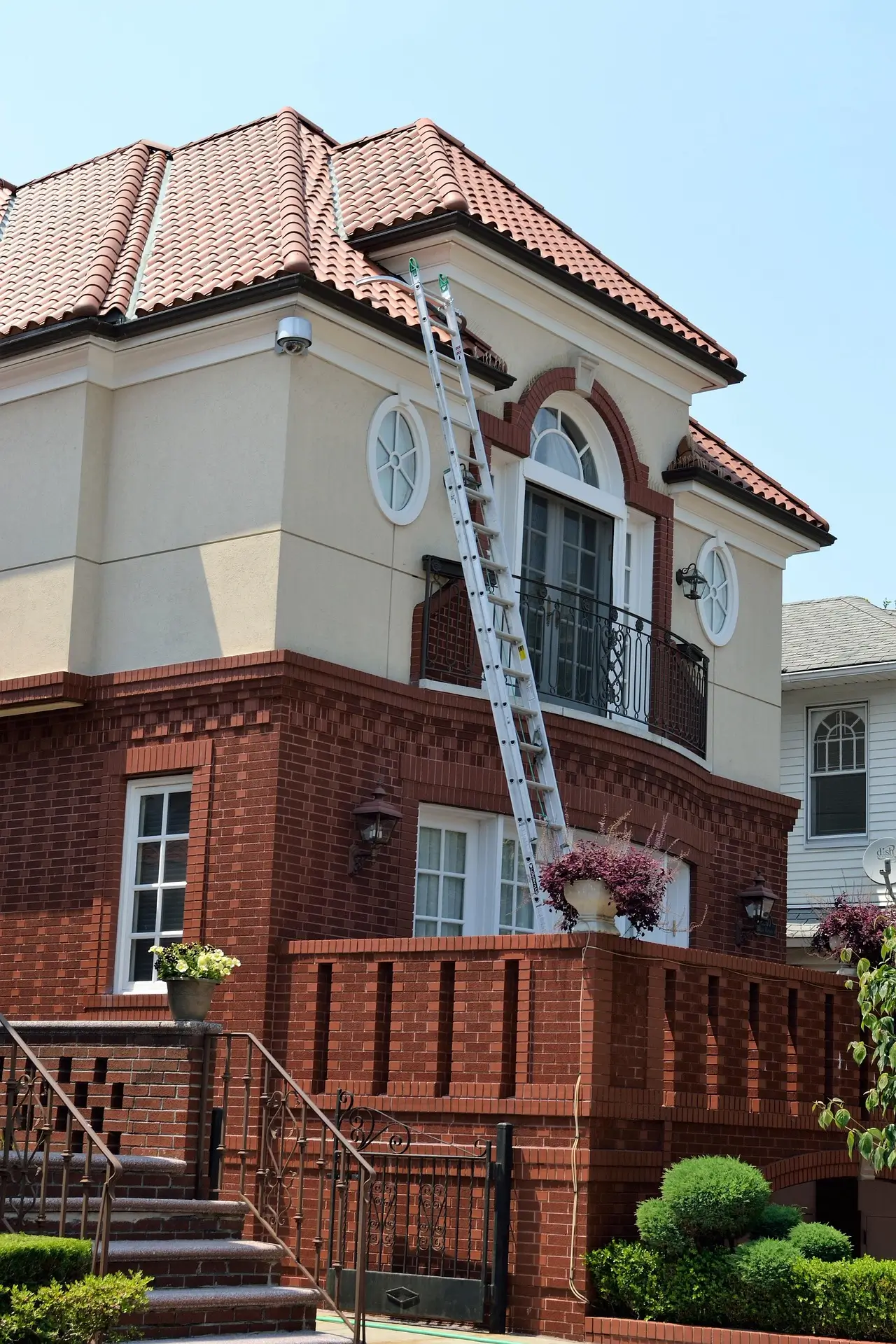
Replacing the full lead flashing around a chimney in Melton Mowbray typically costs £350 to £950, including scaffold or tower access. Step flashing on its own usually runs £200 to £700 per side. Where soakers need replacing at the same time, that typically adds £80 to £180, since most of the labour cost is already covered by the rest of the job.
Lead itself costs roughly £30 to £50 per square metre, or £25 to £70 for a three-metre roll, depending on the code and thickness used.
What pushes a price up or down:
- Scaffold or tower access — chimneys higher than two storeys cost more to reach safely
- Number of roof pitches meeting the chimney — a stack between two slopes needs more lead than one on a single slope
- Lead code required — Code 5 for an exposed back gutter costs more than Code 3 for soakers
- Brick and mortar condition — crumbling joints often need repointing before new flashing goes in
- Chimney size — a wide Victorian stack takes more lead and more time than a slim modern one
- Existing damage — timber or plasterboard damaged by a long-standing leak adds to the final bill
These are general market ranges, not a quote for your chimney. Two stacks the same size can price differently once access, mortar condition and lead code are factored in. A fixed price needs a survey.
Getting the Lead Code and Standards Right, Every Time
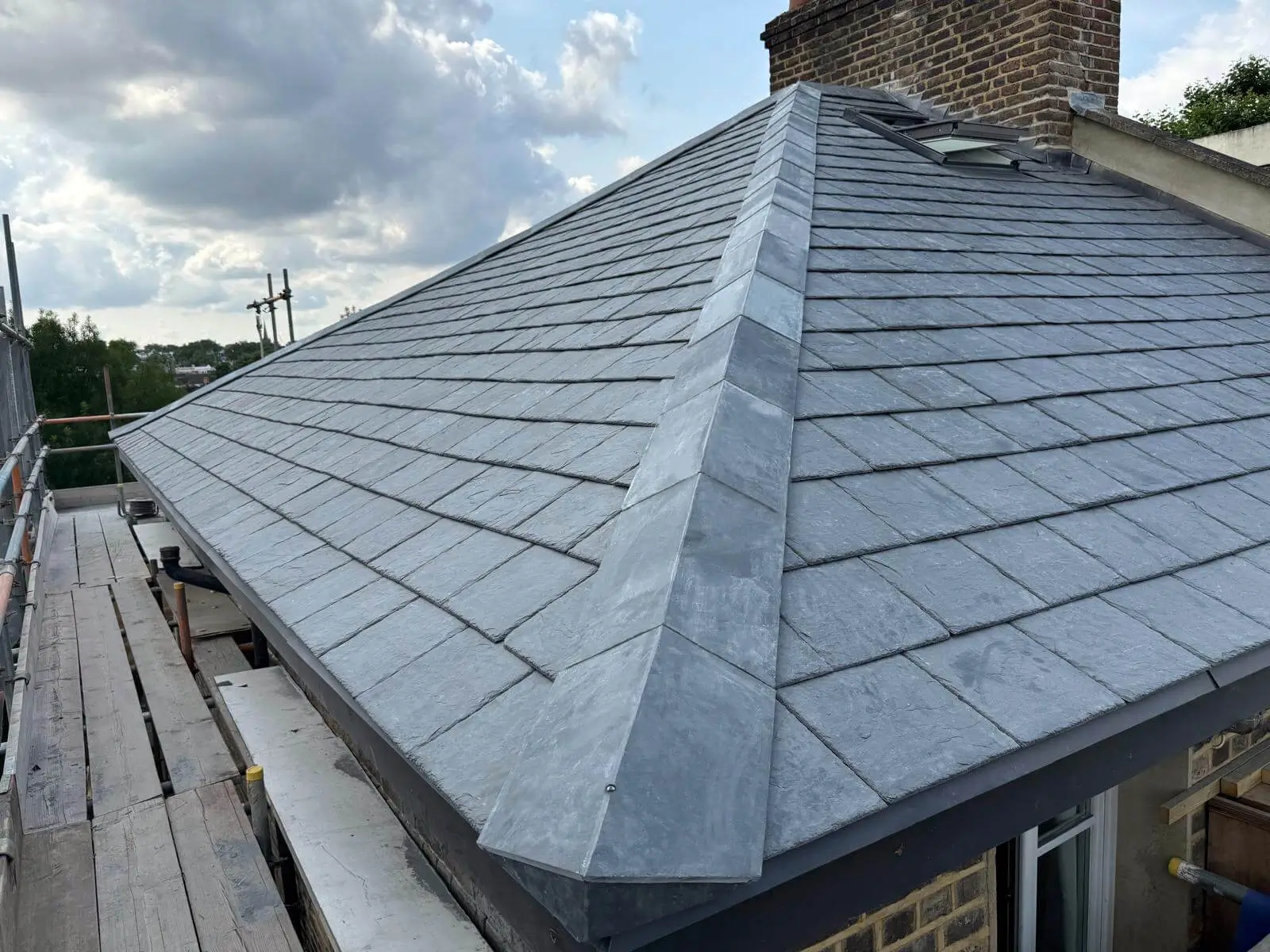
Lead is graded by thickness under BS EN 12588, the British Standard covering milled lead sheet, and the code used changes how long a repair lasts. Code 3 is thin and light, right for soakers. Code 4 is the standard choice for stepped and cover flashing on most Melton Mowbray homes. Code 5 goes on back gutters and other spots taking the heaviest flow of water.
We follow the codes and bay sizes set out by the Lead Sheet Training Academy, the body that trains and certifies UK leadworkers, so every flashing on your roof is sized and fixed the way the standard intends, not just however it happens to fit on the day.
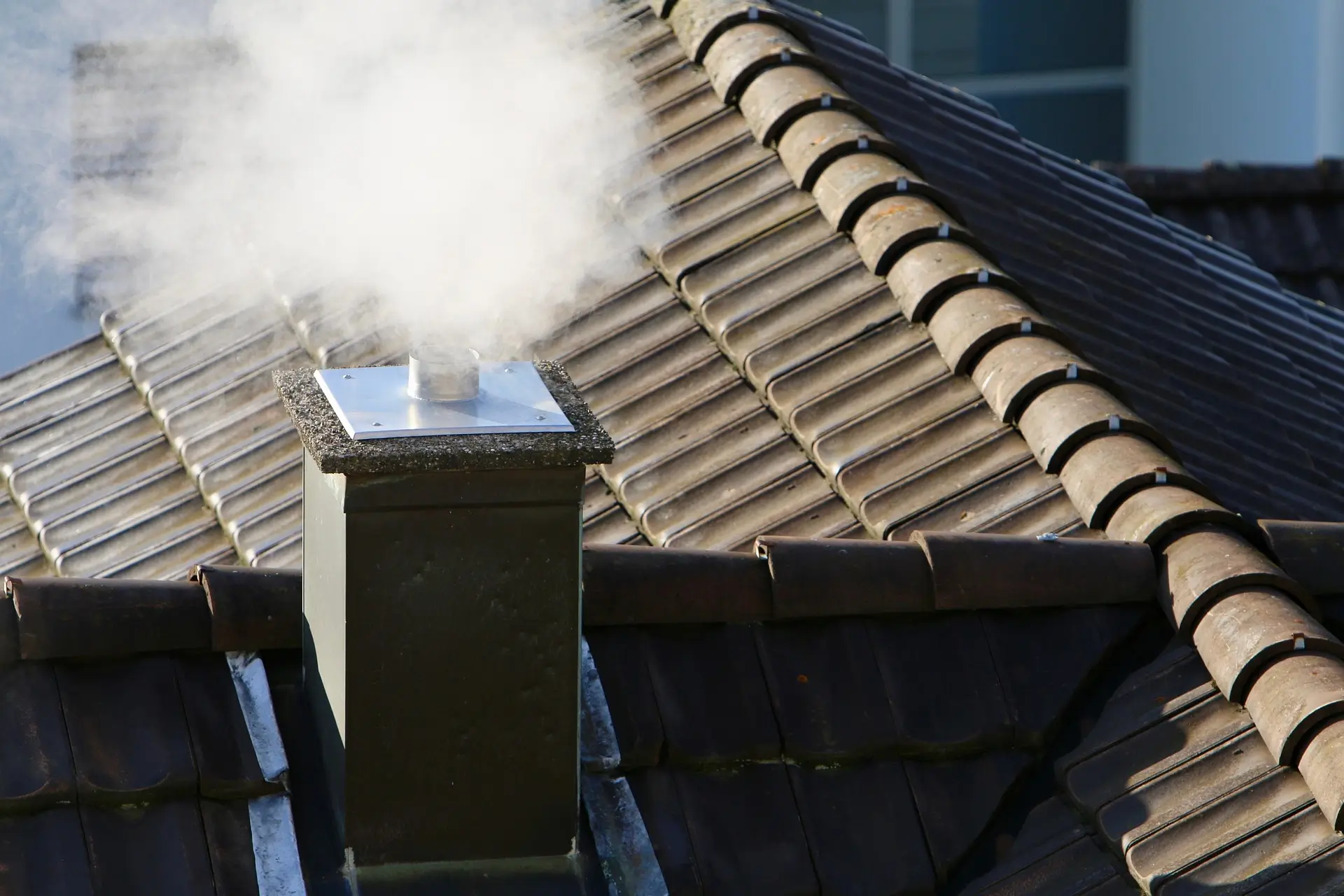
Lead expands and contracts with every change in temperature, and it needs room to move without splitting. A bay cut too wide will crack years before it should. Getting the bay size and fixing centres right is what stops that movement turning into a split.
This matters even more on a listed or heritage property. Buildings close to St Mary's Church and through Melton's conservation areas often need flashing detailed to match what was there originally, not just whatever is quickest to fit.
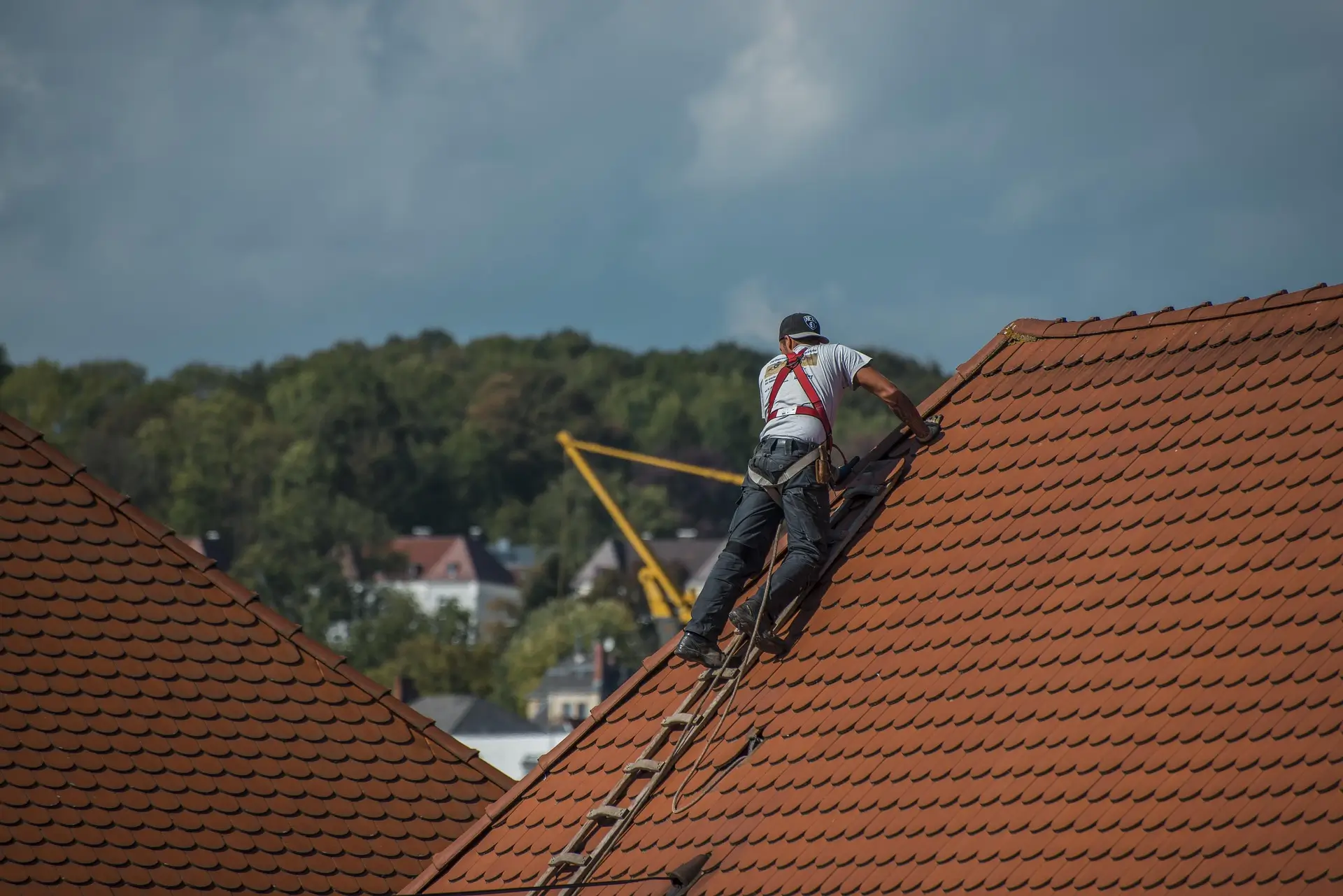
How We Fit Lead Flashing Around Your Chimney, Start to Finish
Every chimney flashing job on a Melton Mowbray roof follows the same order, whether it is one damaged soaker or a full re-flash.
- Free drone survey to see the full extent of the damage before quoting
- Old flashing stripped back to sound, undamaged tile courses
- Chimney brickwork and mortar joint checked, and repointed first if needed
- New soakers cut and dressed under each affected tile course
- Stepped flashing cut, formed and tucked into the mortar joint
- Cover flashing and back gutter dressed and fixed to the correct lead code
- Tiles re-laid or replaced, with every lead edge checked for a tight fit
- Site cleared and the loft checked from inside before we leave
If the stack itself has cracked brickwork or failed pointing hiding under the old flashing, we flag it before covering it back up. Our chimney stack repair service handles that structural work alongside the leadwork, so you are not paying for scaffold twice.
A straightforward re-flash on one chimney usually takes one to two days. A larger stack with a back gutter and multiple pitches, or one needing brickwork repair first, can run three to four days.
How We Prove the Job Is Watertight Before We Leave
A flashing repair is only as good as the check that follows it. We inspect every lead edge and joint from outside once the tiles are back down, then check the loft from inside for any sign of daylight or damp around the stack.
Where a chimney has a history of leaking, we run water down the join with a hose and watch the loft below before calling the job finished. You get photos of the finished work, not just our word that it is done.
Every chimney flashing job across Melton Mowbray is backed by our 10-year workmanship guarantee, so the check does not stop the day we leave your drive.
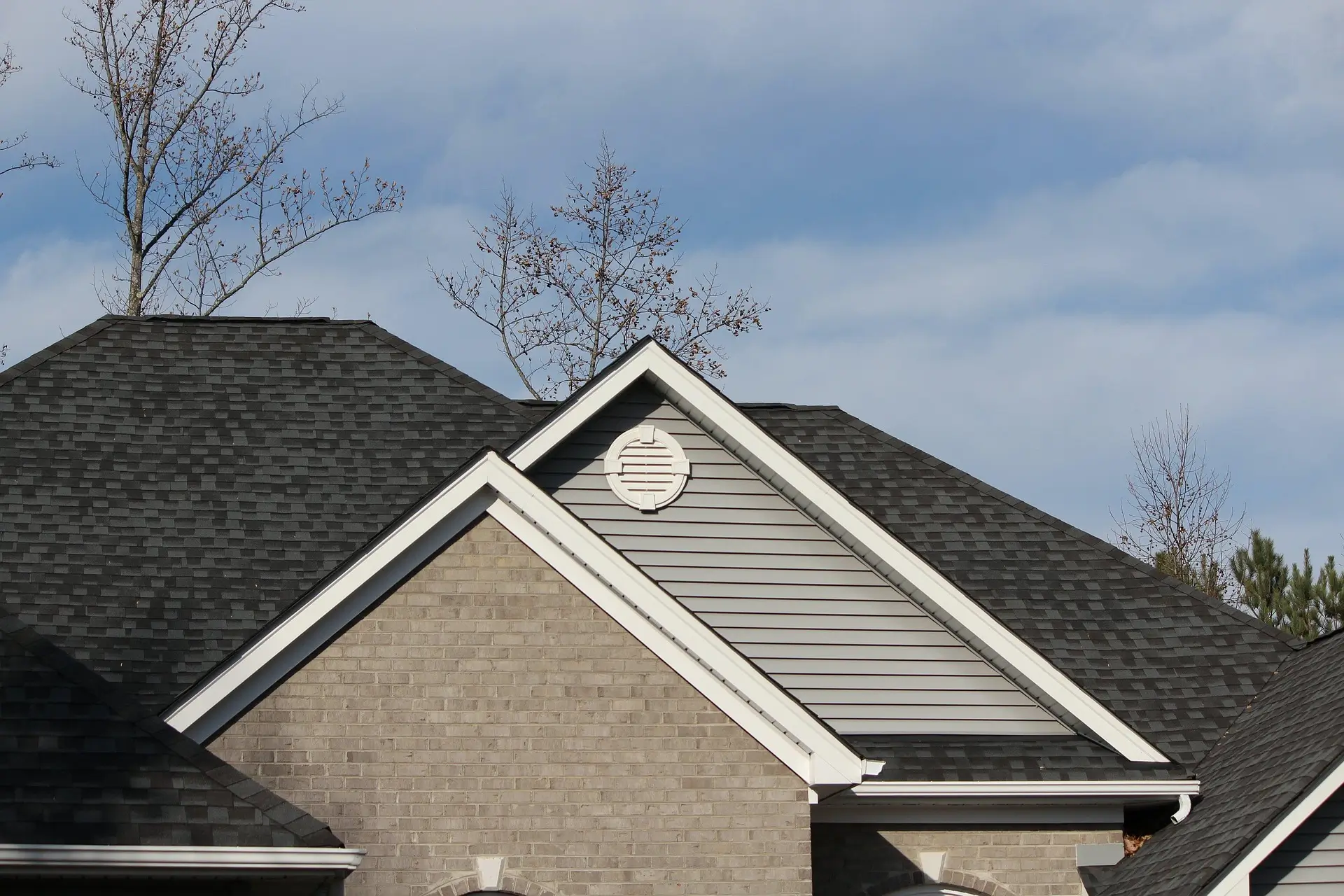
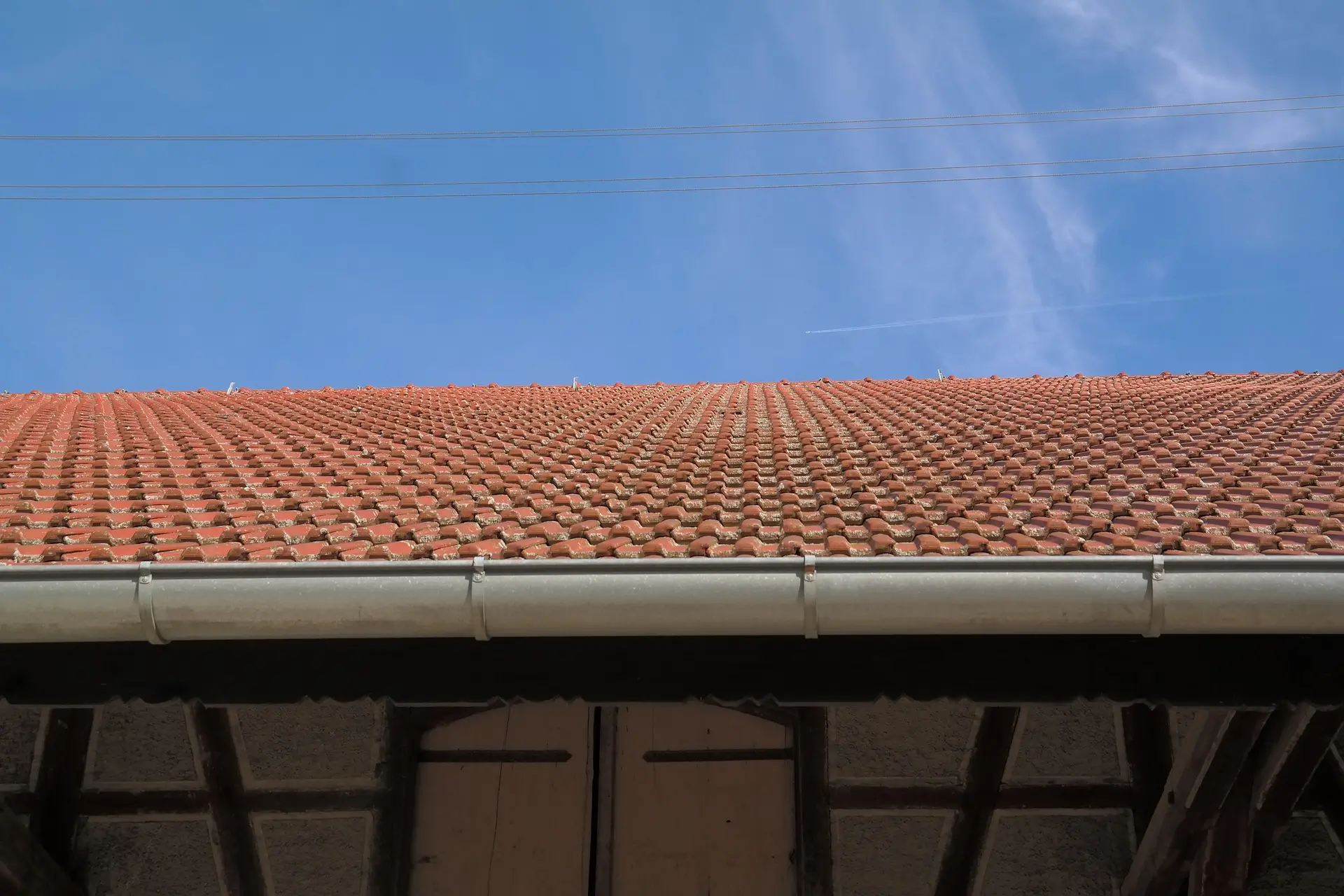
Keep Your Chimney Flashing Watertight for Years to Come
Lead flashing fitted to the right code and standard should outlast most other parts of your roof. A little attention keeps it that way for homeowners across Melton Mowbray.
- Clear moss and leaf debris from the back gutter each autumn
- Check the loft after heavy storms for damp or daylight near the stack
- Keep an eye on mortar joints around the flashing chase for cracking
- Book a free drone survey every few years, or after any major storm
Exposed stacks out toward Waltham on the Wolds and the high ground on the Wolds edge take a harder battering from wind-driven rain than a sheltered chimney in town, so we check those properties a little more often when asked.
Why Melton Mowbray Homeowners Trust Tate & Sons With Their Chimney Flashing
James Tate, our founder, spent fifteen years working roofs across Melton Mowbray and the surrounding villages before starting this business, and lead detailing around chimneys is still one of the jobs he prices and checks himself. He set Tate & Sons up to find out what is genuinely wrong before quoting, rather than covering a bad joint with a quick smear of sealant.
Daniel Oakland, our project manager, brings more than twenty years in the trade, with heritage slate and lead detailing on older Melton homes as one of his specialisms. Between them, our team carries over 40 years of combined experience, NVQ Level 2 and 3 qualifications in Roofing Occupations, and CSCS cards.
Read more about the people behind the work on our About Tate & Sons Roofing page, and see why homeowners across Melton Mowbray call us before anyone else for chimney work.
Areas We Serve Across Melton Mowbray and the Vale of Belvoir
We fit and repair chimney lead flashing across Melton Mowbray and the surrounding villages. If your area is not listed below, call us anyway — there is a strong chance we already cover you.
- Melton Mowbray (LE13)
- Asfordby (LE14 3)
- Old Dalby (LE14 3)
- Nether Broughton (LE14 3)
- Frisby on the Wreake (LE14 2)
- Wymondham (LE14 2)
- Long Clawson (LE14 4)
- Harby (LE14 4)
- Stathern (LE14 4)
- Waltham on the Wolds (LE14 4)
- Bottesford (NG13)
Got Questions?
Your Chimney Lead Flashing Questions, Answered Properly
What is lead flashing around a chimney, and why does it matter so much?
Lead flashing around a chimney is the group of lead details — soakers, stepped flashing and cover flashing — that seal the joint between the brick stack and the roof covering. It matters because this junction takes more water than almost any other part of the roof, with rain running straight down the stack into the gap. When it fails, water gets into the loft and chimney breast within weeks rather than years. A properly fitted, code-correct flashing job is what keeps that junction dry for decades.
How do I know my chimney flashing is leaking?
The clearest sign is a damp patch or brown staining on the chimney breast wall or the ceiling nearby, especially after heavy rain. A musty smell in the loft that gets worse in wet weather is another common early sign. From outside, look for lifted lead edges, green or white corrosion patches, or crumbling mortar in the joint. A free drone survey shows you the whole junction clearly, without anyone needing to go up a ladder.
What is the difference between soakers, stepped flashing and cover flashing?
Soakers are small individual pieces of lead fitted under each tile course along the sides of the chimney, each one catching water like a mini gutter. Stepped flashing sits above the soakers, cut into the mortar joint in a staircase pattern to cover their top edge. Cover flashing, or the apron, dresses over the tiles at the front and forms the back gutter behind the stack. All three work together, and a repair usually needs more than one replaced at the same time.
How much does it cost to replace lead flashing on a chimney?
A full lead flashing replacement on a chimney in Melton Mowbray typically costs £350 to £950, depending mostly on access and scaffold requirements. Step flashing alone usually runs £200 to £700 per side, and replacing soakers alongside other work adds roughly £80 to £180. Brickwork repairs, chimney size and the lead code required all affect the final figure too. A fixed price always needs a proper survey first.
How long does lead flashing around a chimney actually last?
Lead flashing fitted to the correct code and standard typically lasts 50 to 80 years, and sometimes considerably longer. The lead itself can last centuries, but poor installation, the wrong code, or bay sizes cut too wide for the material to move safely all cause much earlier failure, sometimes within 10 to 15 years. The mortar joint holding the flashing in place usually needs checking and repointing well before the lead itself gives out.
Can chimney lead flashing be repaired, or does it always need full replacement?
A single lifted soaker or a short section of failed mortar can often be repaired without replacing the whole assembly. Widespread corrosion, splits across several bays, or lead that has been undersized from the start usually means full replacement makes more sense long-term. We check the whole junction before recommending either route, since patching a chimney that needs a full re-flash rarely saves money once you add up repeat callouts.
Why does lead flashing sometimes crack even when it looks structurally fine?
Lead expands and contracts with every change in temperature, and it needs room to move without splitting. If a bay of lead was cut too wide, or fixed too rigidly, that movement has nowhere to go and the lead eventually cracks along a fold or a fixing point. This kind of failure can appear on flashing that still looks intact from the ground, which is why we check bay sizes and fixing centres on every job, not just the visible surface.
Do older ironstone or limestone chimneys in the villages need different flashing treatment than town-centre brick chimneys?
Often, yes. Properties around villages like Waltham on the Wolds and Wymondham frequently use softer lime mortar rather than modern cement, and lime holds flashing differently once it is cut into a joint. Cutting a chase the same way you would on a hard cement-pointed town chimney can damage a lime joint that was never meant to take that kind of cut. We adjust the technique, and where needed the repointing mix, to suit the chimney rather than using one method everywhere.
Book Your Free Drone Roof Survey Before Your Chimney Flashing Fails Completely
See exactly which lead details your chimney needs before any work starts. No ladders, no pressure — just a clear picture from a local Melton Mowbray team.
Every season a failing chimney flashing is left alone, water works further into the brickwork and timber beneath it, and a straightforward re-flash risks turning into a bigger repointing or timber repair job. A free drone survey shows you exactly which lead details need attention, with footage rather than guesswork. Book now, get a clear written price, and get the junction between your chimney and roof properly watertight.
Get in Touch
Tate & Sons Roofing, Melton Mowbray
13 Cromwell Road, Melton Mowbray, LE13 0AD
📞 01664 490955
✉️ [email protected]