
🏠 Melton Mowbray Concrete Roof Tiling Specialists
Concrete Roof Tiling in Melton Mowbray — A Durable, Affordable Roof Built for the Wolds
- Free Drone Survey
- Directly Employed Roofers
- Written Fixed Price
📞 Call 01664 490955 — free drone survey & a written price
Book Your Free Drone Survey
No scaffold. No pressure. No obligation.
Straight answers from local Melton Mowbray roofers.
🔒 Your details are safe with us. No spam, ever.
Concrete tile is the roof covering fitted on more homes around Melton Mowbray than any other, and there is a good reason for that. It handles wind off the Vale of Belvoir scarp, sheds rain from the River Eye and Wreake Valley without complaint, and costs a fraction of slate or clay for a similar working life. Concrete roof tiling in Melton Mowbray, done properly, gives you a covering that can run 50 to 60 years on a straightforward budget.
This page walks you through when concrete tile is the right call, what it costs in real numbers, how it compares against clay and slate, and what fitting day actually involves. Tate & Sons Roofing works as a roofing contractor across Melton Mowbray, and concrete tiling is one of the jobs our crew handles most often, from single-slope repairs to full re-roofs on the town's post-war estates.
Know When Concrete Tile Is the Right Roof for Your Home
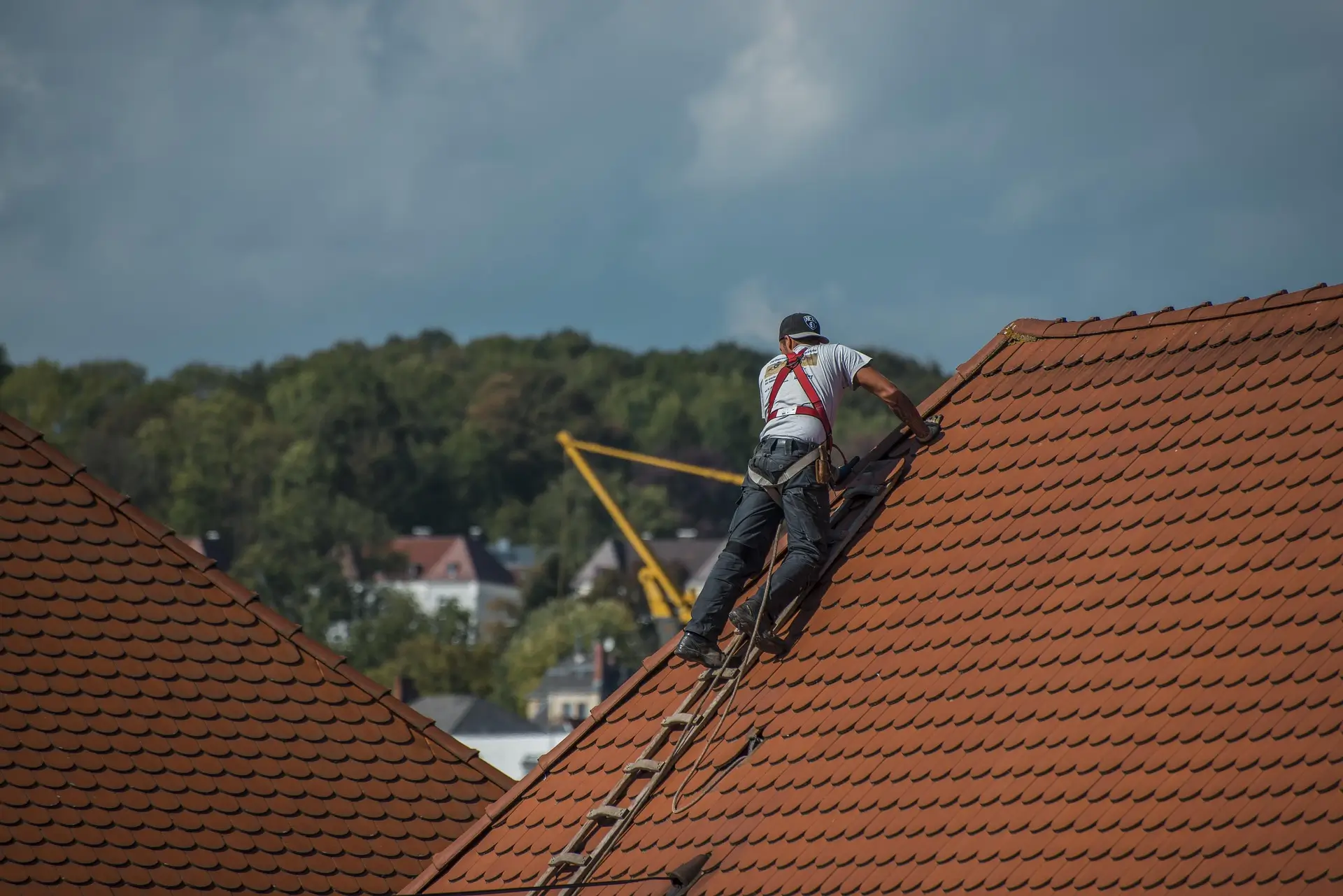
Concrete tile suits almost any pitched roof over 30 degrees, and it is the standard covering on most homes built from the 1950s onward. If your roof already carries concrete tile and is coming up on 40 to 50 years old, it is worth a proper look before another winter goes by.
Watch for these signs that a concrete tiled roof needs attention:
- Tiles cracked, slipped, or missing after a windy spell
- Spalling or flaking on the tile surface, especially on south-facing slopes
- Heavy moss or lichen building up across whole sections
- Sagging visible along the ridge line from the street
- Daylight showing through the roof timbers from inside the loft
- Ceiling stains that get a little worse after every heavy downpour
A handful of cracked tiles on an otherwise sound roof is a repair, not a reason to re-tile the whole thing. But once damage spreads across several slopes, or the tiles themselves are original to a 1960s or 1970s build, patching stops being the economical option. A free drone survey gives you clear footage of every slope, ridge and valley, so the decision is based on what is actually up there, not a guess from the pavement.
Concrete, Clay or Slate — Choosing the Right Tile
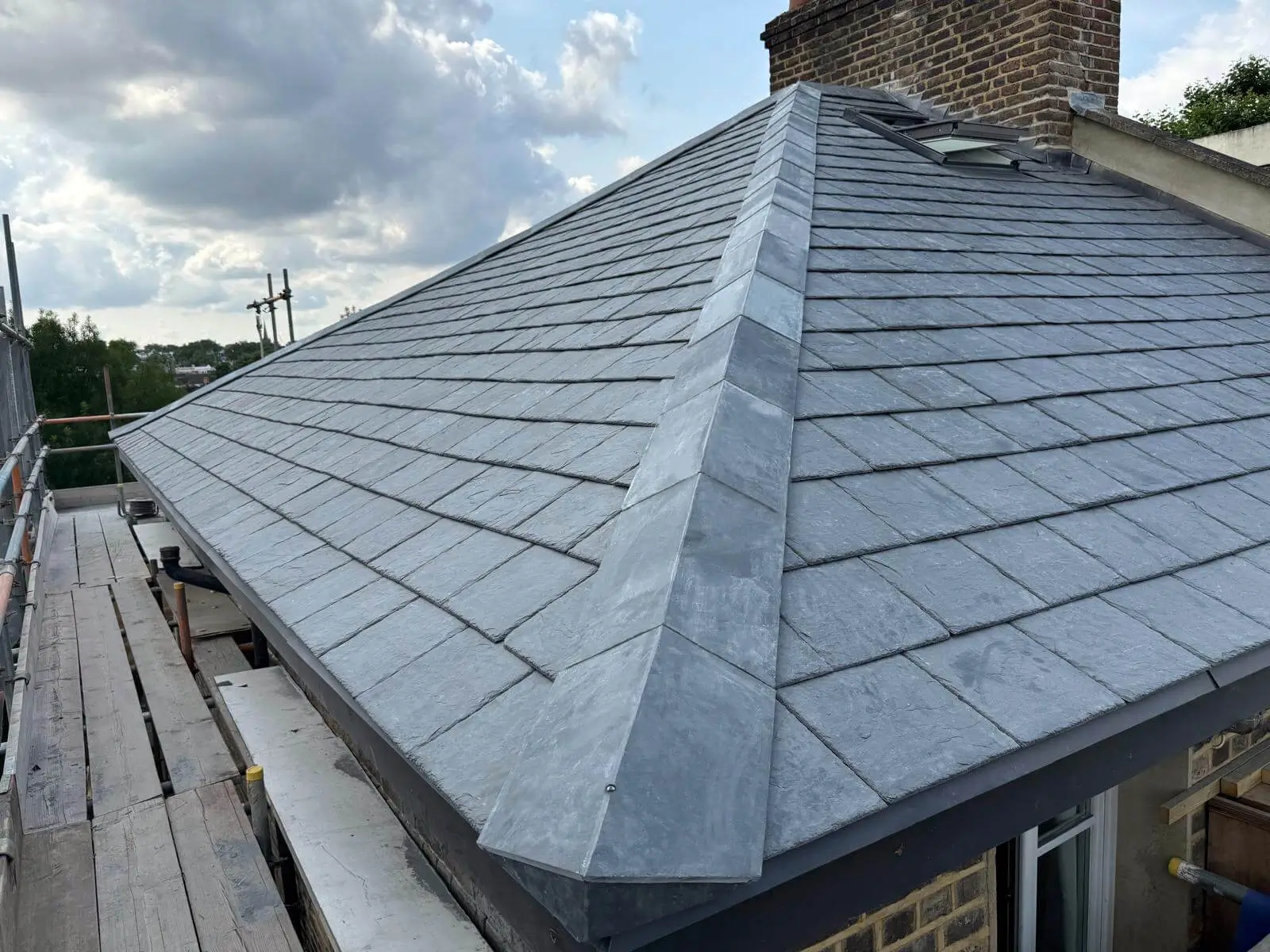
Concrete is the most affordable and most widely fitted roof tile in the UK, and for standard homes across Melton Mowbray it is usually the sensible choice. Clay tile costs more but brings a warmer, more traditional tone. Natural slate sits at the top of the price range and suits period and listed properties best. The right pick depends on your property's age, your budget, and how long you want the roof to last.
Concrete tiles themselves come in a few different profiles, and the profile you choose affects both cost and finish:
| Tile type | Typical cost (per m², fitted) | Typical lifespan | Best for |
|---|---|---|---|
| Concrete interlocking (double roman, pantile-style) | £45–£70 | 50–60 years | Standard homes, straightforward re-roofs, budget-led jobs |
| Concrete plain tile | £65–£90 | 50–60 years | A smaller, traditional-looking tile pattern on later-built homes |
| Clay tile (for comparison) | £70–£110 | 60–80 years | Character homes wanting a warmer, traditional tone |
| Natural slate (for comparison) | £100–£160 | 80–100+ years | Period and listed properties, premium finish |
Interlocking profiles like the double roman need as few as 10 to 18 tiles per square metre, which keeps labour time down and is why they dominate new-build and re-roof work. Plain concrete tiles are smaller, need up to 60 tiles per square metre, and take longer to lay, which pushes the price closer to clay. If your property calls for a traditional covering instead, our clay roof tiling service covers that ground in full.
Asfordby's older streets, built through the town's mining and industrial years, carry a strong run of mid-century terraces and post-war estates where concrete tile was the original covering and remains the sensible match today. Out toward Frisby on the Wreake, where detached homes sit at a higher price point, owners more often ask about clay or slate instead. Daniel Oakland, our project manager, fits both and will tell you honestly which one suits your roof rather than upselling a finish you do not need.
What Concrete Roof Tiling Really Costs in Melton Mowbray
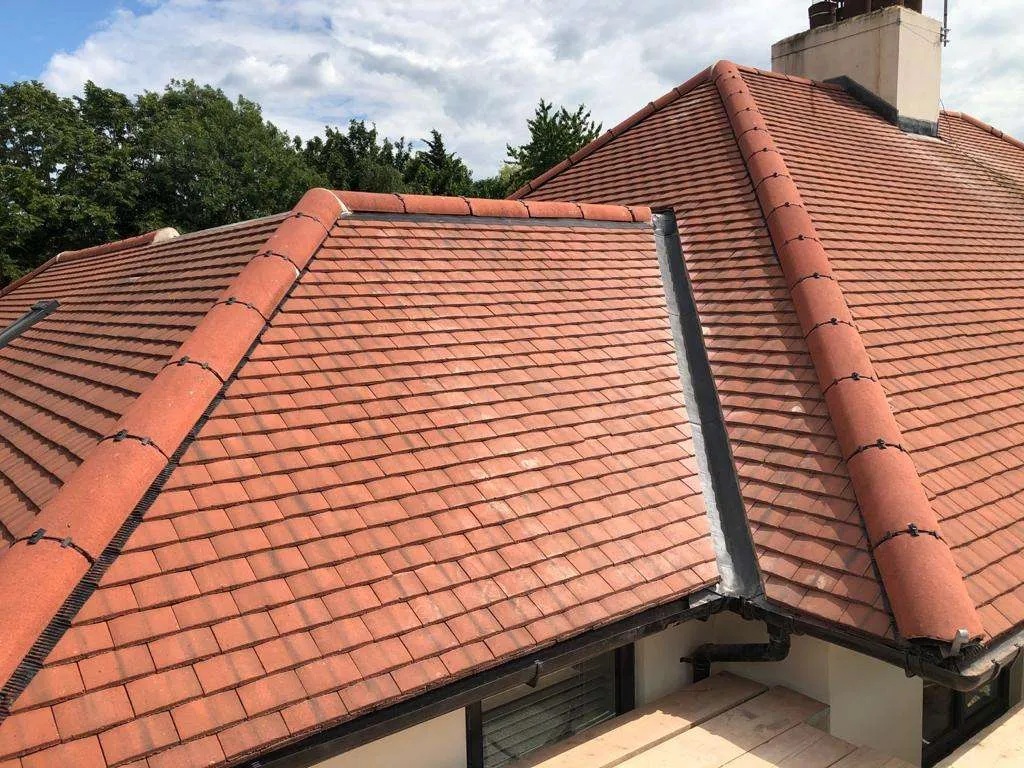
As a general guide, concrete interlocking tile runs £45–£70 per square metre fully fitted, with plain concrete tile closer to £65–£90 per square metre because of the extra labour involved. For a typical semi-detached roof of around 80–100m², that puts a straightforward gable-end re-tile in concrete at roughly £4,500–£7,000, and a more complex hipped roof at £7,500–£10,500. These are general market ranges, not a quote for your roof.
What pushes the price up or down:
- Tile profile — interlocking costs less to fit than plain tile
- Roof shape — hips, valleys and dormers all add labour time
- Access — a detached roof scaffolds more cheaply than one boxed in by neighbouring buildings
- Batten and felt condition — old battens usually need replacing under new tile, typically adding £600–£1,500
- Strip-out and disposal — removing and disposing of the old covering usually adds £800–£2,000
- Colour and finish — granular or textured finishes cost a little more than a standard smooth tile
Labour typically makes up 40 to 60 percent of the total, and roofers across this part of Melton Mowbray generally charge in the region of £200–£300 per day. Two roofs the same size can price very differently once shape, access and batten condition are taken into account. A fixed price needs a survey.
Getting the Pitch, Fixing Spec and Regulations Right Before Work Starts
Concrete interlocking tile needs a minimum roof pitch of around 30 degrees to shed water properly, and plain concrete tile needs closer to 35 degrees. Fit either below that pitch and water can drive back up under the tiles in heavy weather, which is exactly the sort of fault that shows up as a leak years later rather than on day one.
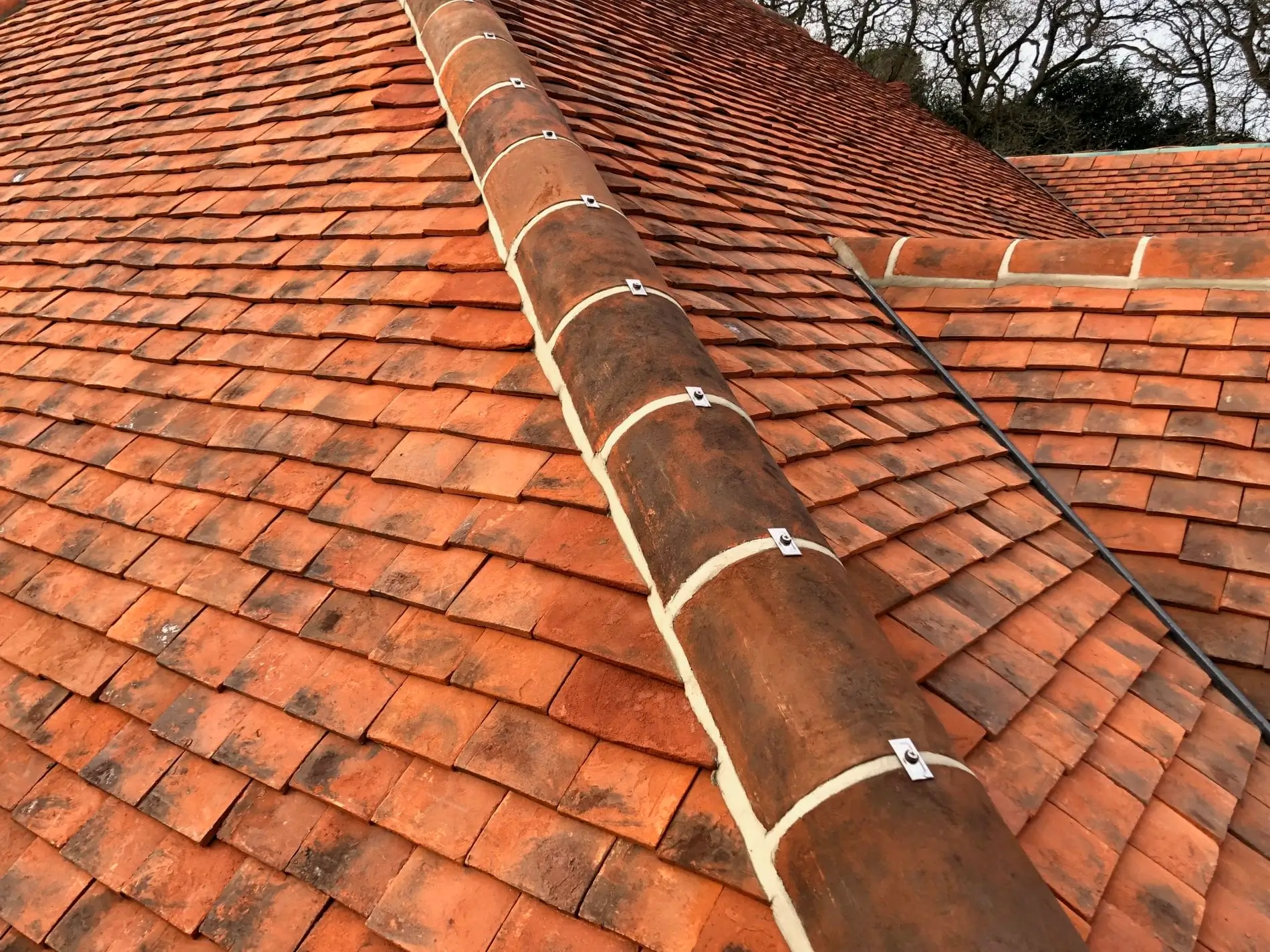
Fixing specification matters just as much as pitch. Every roof we tile is fixed to BS 5534, the British Standard covering nail and clip fixings, wind uplift and exposure zones. The Roof Tile Association's guidance on materials suited to the UK climate sets out why this matters — tiles and fixings both need to withstand sustained wind-driven rain, not just an average British shower. Properties out toward the Vale of Belvoir scarp and the ridge villages around Scalford take a harder battering than a sheltered street near Melton Country Park, so we specify extra clip-fixing on exposed slopes rather than relying on the bare minimum.
Most like-for-like concrete re-tiling does not need planning permission, but Building Regulations still apply. Current standards cover weather resistance, fire spread, structural strength and roof ventilation, and we handle the Building Control sign-off as a standard part of every job. Properties near St Mary's Church and through parts of the town centre sometimes sit within areas where the planning authority looks more closely at visible roofing changes, and we check this before quoting on anything in that area.

What Happens on Fitting Day, From Scaffold to Sign-Off
A concrete re-tile follows a set order on every job:
- Scaffold erected and the site made safe
- Old tiles stripped back to the roof timbers
- Battens, felt and rafters checked, with any rot replaced
- New breathable felt and battens fitted to current standards
- New concrete tiles fixed from the eaves up to the ridge
- Ridge, hip and verge details finished to shed water cleanly
- Site cleared and the finished roof checked before we leave
A typical semi-detached roof in concrete interlocking tile takes around 3 to 6 working days. A hipped roof, or one using plain concrete tile, usually runs 5 to 8 days because of the extra cutting and detailing involved. Weather has the final say on
the schedule — a wet or high-wind week can push things back, and we build a realistic allowance in rather than promising a date we cannot keep.
You do not usually need to leave the property while the work is done. Expect noise and activity above for the duration, and we protect driveways, borders and anything stored below the working area throughout. Every job carries our 10-Year Workmanship Guarantee once it is signed off.
Keep a Concrete Tile Roof Performing for Its Full 50 to 60 Years
Concrete tile needs very little upkeep, but a small amount of attention keeps it looking sharp and performing well for decades. Moss and algae are the biggest issue on concrete tile specifically, since the slightly porous surface gives spores something to grip onto that smoother clay and slate resist better.
- Clear gutters and valleys of moss and debris each autumn
- Have heavy moss build-up removed professionally rather than left to spread
- Check the loft after storms for daylight or damp patches
- Book a free drone survey every few years, or after any major storm
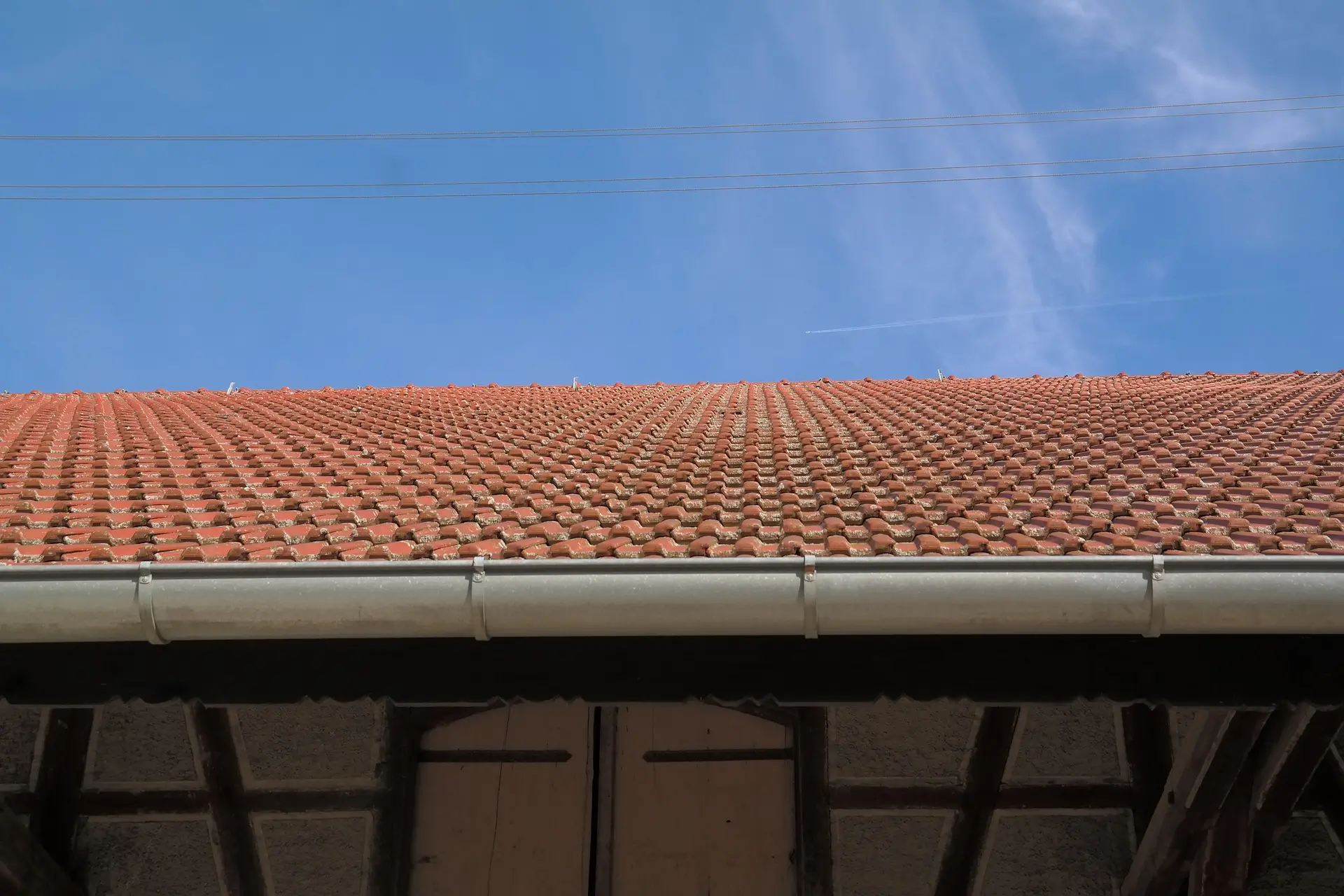
Avoid pressure-washing concrete tiles yourself — the force can strip the surface finish and shorten the tile's working life rather than extend it. Our moss and algae removal service clears growth safely without damaging the tile surface, and treats the roof to slow regrowth. It is a far cheaper habit than letting moss sit for years and having to deal with saturated, waterlogged tiles later.
Why Melton Mowbray Homeowners Choose Tate & Sons for Concrete Tiling
Concrete re-tiling looks like a simple job until it is fitted badly — wrong batten gauge, skimped fixings, or tiles cut around a valley without proper detailing. Daniel Oakland, our project manager, has more than twenty years in the trade and runs full re-roofs day to day, and concrete tiling is the practical, cost-effective work he fits most often across the borough. He specifies the fixing spec for your actual site, not a generic minimum, and he is part of the crew that turns up to do the job, not just the man who quoted it.
Founder James Tate spent fifteen years working roofs across Melton Mowbray before starting the business, and he still prices most jobs himself. His founding rule was simple: find out what is genuinely wrong, use the right materials for the property, and stand behind the result afterwards. Between the team we hold over 40 years of combined roofing experience, NVQ Level 2 and 3 qualifications in Roofing Occupations, and CSCS cards. Janice Whitmore, our office manager, keeps you posted from the first call through to final sign-off. Read more about the people behind the work on our About Tate & Sons Roofing page.
Areas We Serve Across Melton Mowbray and the Vale of Belvoir
We fit concrete roof tiling across Melton Mowbray and the surrounding villages and borough. If your area is not listed below, call us anyway — there is a strong chance we already cover you.
- Melton Mowbray (LE13)
- Asfordby (LE14 3)
- Old Dalby (LE14 3)
- Nether Broughton (LE14 3)
- Frisby on the Wreake (LE14 2)
- Wymondham (LE14 2)
- Long Clawson (LE14 4)
- Harby (LE14 4)
- Stathern (LE14 4)
- Waltham on the Wolds (LE14 4)
- Bottesford (NG13)
Got Questions?
Your Concrete Roof Tiling Questions, Answered Properly
How much does concrete roof tiling cost in Melton Mowbray?
As a general guide, concrete interlocking tile runs £45–£70 per square metre fully fitted, and plain concrete tile £65–£90 per square metre. A typical semi-detached gable-end roof usually costs £4,500–£7,000 in concrete, and a hipped roof £7,500–£10,500, with access, batten condition and roof shape all affecting the final figure. A free drone survey gives you an exact written price rather than a phone estimate. A fixed price always needs a survey.
How long do concrete roof tiles actually last?
Concrete roof tiles typically last 50 to 60 years when fitted correctly and looked after. Manufacturers often set a minimum working life of 30 years, but well-maintained concrete tiles regularly run past that, especially where moss is cleared before it takes hold. Exposure, pitch and installation quality all affect where in that range a particular roof lands. A poorly fitted roof can fall well short, which is why fixing specification matters as much as the tile itself.
Is concrete tile as good as clay tile, or is it a lesser option?
Concrete and clay both perform well when fitted to current standards — concrete simply costs less and clay lasts a little longer with a different look. Concrete tile is the most widely fitted roof covering in the UK for good reason: it is durable, affordable, and available in colours and profiles that suit most modern homes. Clay tends to hold its colour longer and suits period properties better. Neither is objectively better; the right choice depends on your budget and your property's character.
What is the minimum roof pitch for concrete tiles?
Concrete interlocking tiles need a minimum pitch of around 30 degrees, and plain concrete tiles need closer to 35 degrees. Below that pitch, wind-driven rain can drive back up under the tiles instead of running off, leading to leaks that often only show up years later. Some interlocking profiles can go lower with the correct headlap and additional detailing, but this needs specifying properly, not assumed. We check your roof's actual pitch during survey before recommending a tile profile.
How do I stop moss and algae taking over my concrete tiles?
Regular gutter clearing and an occasional professional clean are the most effective habits, since moss holds moisture against the tile surface once it establishes. Concrete's slightly porous finish gives moss spores more to grip than smoother clay or slate, so it needs a bit more attention over the roof's life. Avoid pressure-washing the tiles yourself, since the force can strip the surface finish. Our moss and algae removal service clears growth safely and treats the roof to slow regrowth.
Why do my new concrete tiles have a white, chalky patch on them?
That white patch is almost always efflorescence, sometimes called lime bloom, and it is a normal part of a concrete tile's early life rather than a fault. It happens when compounds within the concrete migrate to the surface as moisture moves through the tile after fitting. It is purely superficial, does not affect the tile's strength or performance, and typically fades within the first year or two as rain washes it away. If a patch has not faded after a couple of winters, it is worth a call so we can take a look.
Will my roof structure actually take the weight of concrete tiles?
In almost every case, yes — UK roofs are designed with tile loading in mind, and concrete interlocking tile weighs around 50kg per square metre, a fairly standard figure for a pitched tiled roof. It is heavier than natural slate, which typically weighs around 38kg per square metre, but roof timbers built for tile are sized to carry it. The exception is an older roof with existing timber problems, or one where you are switching from a much lighter covering, which is exactly what our survey checks before any quote is given.
Does the wind coming off the Vale of Belvoir change how you fit concrete tiles?
Yes — properties out toward the scarp and the higher ground around Scalford and Waltham on the Wolds sit in a more exposed wind zone than a sheltered street near the Stockyard or Melton Country Park. We specify fixing to BS 5534 on every job, and on exposed slopes that usually means additional clip-fixing rather than the bare minimum nail spec. Getting this right at the ridge and verge is what stops tiles lifting or slipping in the first proper gale after fitting, rather than five years down the line.
Book Your Free Drone Roof Survey Today
See exactly what your concrete tiled roof needs before any work starts. No ladders, no pressure — just clear footage from a local Melton Mowbray team.
Every season a worn concrete tile roof is left alone, moss holds more moisture against the tiles and small cracks let more water reach the battens beneath. What starts as a section of loose tiles can turn into a full re-tile if it sits unattended through another wet winter. Book a free survey today, get an honest written price, and get it sorted properly, first time.
Get in Touch
Tate & Sons Roofing, Melton Mowbray
13 Cromwell Road, Melton Mowbray, LE13 0AD
📞 01664 490955
✉️ [email protected]